
Global Implications of the EU's Environmental Crime Directive

This guest blog is authored by Ana Laura Moreno Méndez, a Mexican law student pursuing a Master’s in International and European Law at Université Paris Cité, France, and a research volunteer at World Youth for Climate Justice (WY4CJ).
Environmental crime is one of the most pressing threats to the natural world and all of us who rely on it. Damage to the earth cannot be separated from damage to humans, and human prosperity cannot be conceived without a functioning biosphere. Environmental crime destabilises communities and economies, threatens public health, undermines food security, weakens the rule of law, and fosters corruption. Despite being the fourth largest criminal activity globally, it continues to receive inadequate resources and political prioritisation.
Historically, most environmental law has been handled through voluntary commitments and administrative regulations, making it easier for companies to anticipate and budget for fines without meaningfully changing their behaviour. This approach has proven insufficient, but criminal law is capable of filling this gap. Not because it is punitive, but because environmental criminal law is preventive. The EU's decision to strengthen the role of criminal law in addressing serious environmental harm reflects this growing recognition. The 2024 Environmental Crime Directive takes that evolution a step further by introducing qualified offences comparable to ecocide, acknowledging that the gravest forms of environmental harm warrant the strongest criminal response.
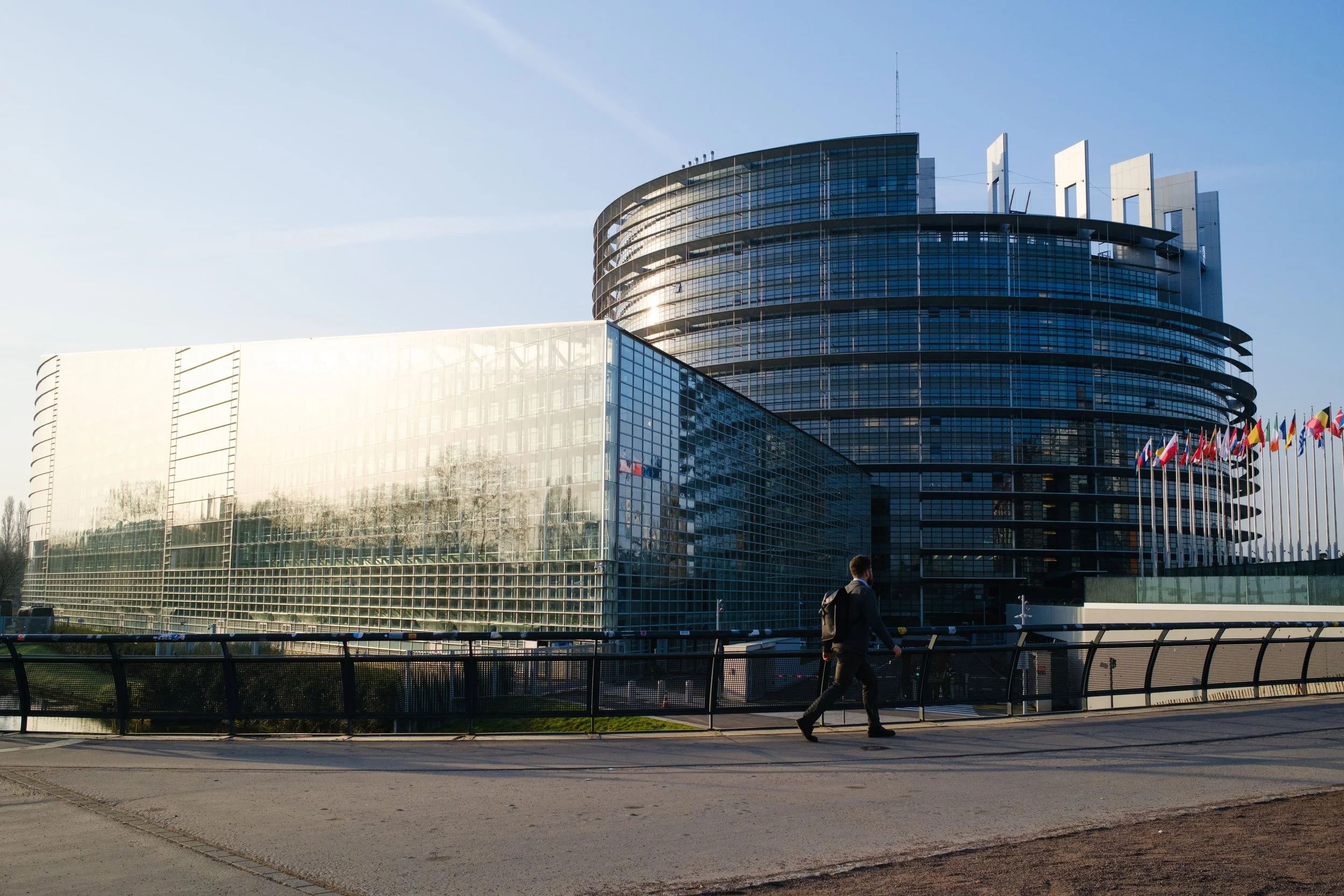
The European Parliament, Strasbourg. Image credit: European Union via Flickr.
The Environmental Crime Directive was first adopted in 2008 and coexisted with Directive 2009/123/EC on ship-source pollution. Following a process of revision initiated by the European Commission, a new directive entered into force on 20 May 2024. The reasons were concrete; the number of cases successfully investigated and sentenced remained very low, sanctions were not dissuasive, cross-border cooperation was inadequate, enforcement gaps existed across all member states and at every level of the enforcement chain, and the lack of reliable data made monitoring impact difficult.
Reflecting concepts advanced by the Independent Expert Panel's 2021 legal definition of ecocide, the Directive introduces, for the first time at EU level, qualified offences encompassing conduct comparable to ecocide. Member States are required to establish as qualified offences those cases where the listed criminal conduct causes the destruction of, or widespread and substantial damage that is either irreversible or long-lasting to, ecosystems, habitats, air, soil or water. These offences must carry more severe penalties than the other environmental offences set out in the Directive.
Member states were required to transpose the directive by 21 May 2026 and those that fail to communicate national implementing measures expose themselves to infringement proceedings initiated by the European Commission, which can ultimately lead to referral before the Court of Justice of the EU and financial penalties. Transposing a directive means embedding its goals and objectives into the national legal framework and, unlike regulations, directives leave room regarding how they are implemented, which requires additional decision-making at the domestic level. While definitions are more precise in the 2024 directive than in its predecessor, most interpretations still require a deeper understanding of the underlying environmental law, and real divergence across member states' legal systems is both predictable and understandable, the answer will only be found through dialogue.
The Directive has arguably played a significant role in influencing the recent evolution of international environmental criminal law. Since its adoption in 2024, momentum behind ecocide law has continued to build across the globe. In September 2024, Vanuatu, Fiji and Samoa jointly submitted a formal proposal to amend the Rome Statute of the International Criminal Court to include ecocide as a fifth international crime, alongside genocide, crimes against humanity, war crimes and the crime of aggression. Momentum is also evident at the regional level, with the development of a model ecocide law for Latin America, and the African Ministerial Conference on the Environment identifying ecocide as a regional priority.
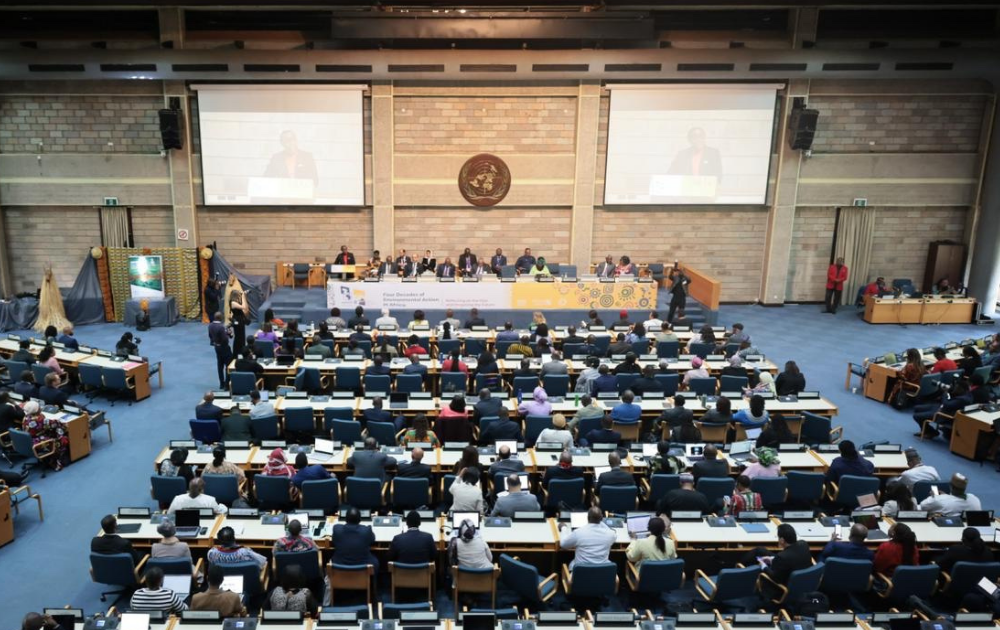
Ecocide is identified as a regional priority at the 2025 African Ministerial Conference on the Environment. Image credit: United Nations Environment Programme, Africa Office via Flickr.
As EU Member States transpose the Directive into domestic law, one significant opportunity is the possibility of introducing standalone domestic crimes of ecocide. The Directive requires Member States to criminalise a range of serious environmental offences and to treat the gravest cases as qualified offences carrying more severe penalties. It does not, however, require them to establish ecocide as a distinct criminal offence. As governments review and modernise their criminal codes, they can choose to go further by creating standalone ecocide laws that recognise the most severe and either widespread, long-term or irreversible environmental harm as a crime in its own right.
Governments choosing this path would be building on an increasingly well-established international trend. Belgium and France have already established domestic ecocide offences, Mauritius has recently joined them, and legislative proposals are advancing in countries including India, Philippines, Italy, Peru, Scotland, Brazil, and Mexico.
Member States may also choose to strengthen jurisdiction over certain offences committed beyond their borders, particularly where they involve legal entities established within their territory or cause significant environmental harm affecting it. Used alongside stronger domestic legislation, these provisions could help ensure that accountability keeps pace with the transboundary nature of many of today's most serious environmental harms.
This matters especially in the context of EU-Latin America relations, a relationship gaining renewed momentum through the MERCOSUR negotiations and the EU-Mexico trade agreement, both built on a shared commitment to open markets and to upholding existing environmental laws. Yet this project becomes difficult to sustain when the Latin American region continues to face pressure from one ecocidal project after another.
A recent example has unfolded this year in Topolobampo, Sinaloa, Mexico, where the construction of an ammonia plant built by the Swiss group Proman, financed by the German public bank KfW IPEX-Bank, saw the destruction of 28 hectares of mangroves in a Ramsar-designated site of international importance. That same plant risks contaminating the ecosystem on which around 4,000 fishing families, and around 2,500 members of the Mayo-Yoreme indigenous community, depend daily.
This is precisely the scenario that ambitious transposition of the extraterritorial jurisdiction provisions could address, if member states choose to go that far. This is Europe's opportunity to reinforce its credibility in the climate leadership space, and for Latin America, the opportunity to position itself as a co-setter of the emerging global framework rather than a passive follower of standards and interests.
It follows that the directive does not operate alone, it is one piece of a broader regulatory ecosystem alongside instruments like the Corporate Sustainability Due Diligence Directive and the Corporate Sustainability Reporting Directive, and three landmark advisory opinions have converged to confirm that states carry binding legal obligations to prevent serious environmental harm: the International Tribunal for the Law of the Sea delivered the first on 21 May 2024, the Inter-American Court of Human Rights followed with Advisory Opinion OC-32, and the ICJ delivered its Advisory Opinion on Obligations of States in respect of Climate Change on 23 July 2025.
Companies not only have the obligation to follow this framework, but the power to advocate for it, and for good reason. The stakes of non-compliance are clear: criminal liability extends not only to the company but to those leading it, who face not only administrative but criminal proceedings, including potential imprisonment.
Therefore, environmental action is no longer an optional mark of good corporate behaviour, it is becoming a prerequisite for long-term commercial resilience. Perhaps the most important shift is recognising that a clear and predictable legal framework is not a burden on business but a foundation for stable investment, sound risk management and long-term profitability. Environmental impact assessments are becoming as essential as financial feasibility studies, and environmental compliance is increasingly a core governance function rather than a regulatory afterthought. Companies that recognise this shift early will be better positioned to thrive in markets that increasingly value environmental responsibility.
Success will depend on how quickly the understanding of nature's intrinsic value and our intertwined relationship with it turns into action. Accountability is not the enemy of progress, it is its condition. Recognising ecocide as a crime is not an obstacle to growth, it is what will foster it, because damaging the earth means damaging humankind, and if human prosperity is not sustainable, it is not truly prospering.