Ecocide: the conversation I owe my son
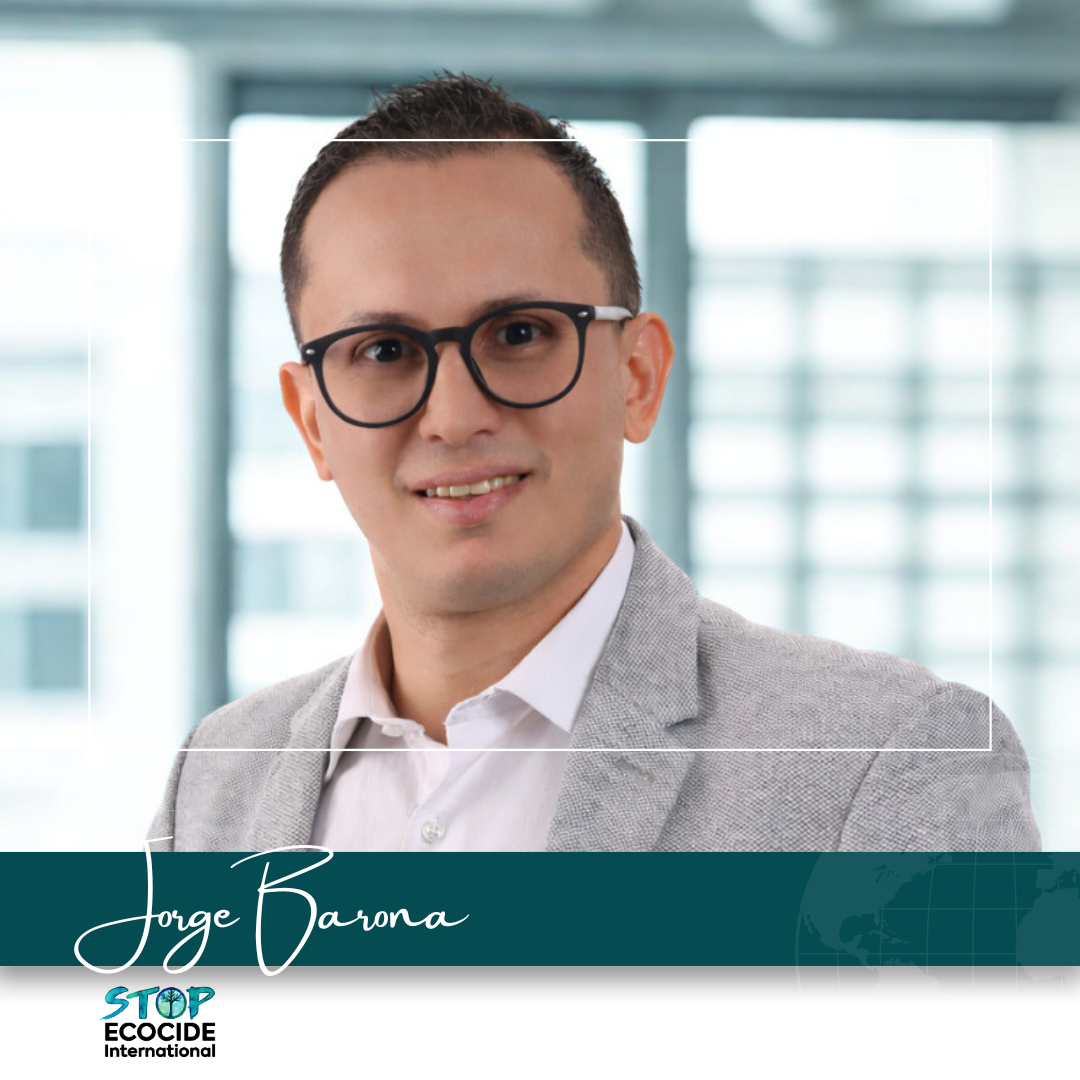
This guest blog is authored by Jorge Barona, an international lawyer and legal consultant.
There are conversations you know you will have with your children, even if you do not yet know when.
One day I'll have to explain to my son why wars exist, why inequality exists, or why people make decisions that affect others. And I suspect that, sooner or later, I'll also have to answer a much more uncomfortable question: what did my generation do when it realized that the planet was changing?
That is, perhaps, one of the conversations that worries me the most.
For over a decade, I have worked as a lawyer and consultant on research and innovation projects funded by the European Commission. My work has allowed me to support companies, universities, and technology centers developing solutions for some of the greatest challenges of our time: the energy transition, the circular economy, industrial decarbonization, and the protection of natural resources.
In that environment, technical concepts and legal debates abound. It was precisely at a conference in Brussels last year that I heard the term ecocide again.
A few years ago, the first time I heard that word, I registered it as any lawyer would: an interesting legal concept, an emerging debate in international law worth following closely. But last year, with my son now aged three, it had a different impact and made me think about it in a particular way, no longer simply as a professional matter. It became a question.
Because ecocide is not, at its core, a discussion about courts. It is a conversation about responsibility. And responsibility ceases to be an abstract idea when you realize that someone will inherit the consequences of your decisions.
My son doesn't yet know what environmental governance means. He'll probably never be interested in debates about the Rome Statute or the potential inclusion of ecocide as an international crime. But he will breathe the air we choose to conserve or pollute. He will drink the water we protect or fail to protect today. He will live in the ecosystems our generation is able to preserve.
As a lawyer, I could explain that ecocide seeks to assign responsibility for widespread, severe, or long-term damage to the environment when it compromises the capacity of ecosystems to sustain life. I could discuss definitions, regulatory proposals, and academic debates.
However, I am increasingly convinced that the truly important conversation is not solely for lawyers. It must move beyond offices, universities, and courts to reach businesses, families, and, above all, our homes.
The question isn't simply whether ecocide will become an international crime. The question is what we are willing to do to prevent certain harm from happening in the first place.
For years we became accustomed to thinking that there was an inevitable choice between economic development and environmental protection. As if caring for the planet meant giving up on progress. My professional experience has shown me exactly the opposite.
I've seen companies transform waste into new raw materials, develop technologies capable of reducing emissions, and design business models where sustainability is not an obstacle, but a competitive advantage. I've also seen how European regulations and funding programs have fostered a new way of understanding innovation: one that measures success not only by economic growth, but also by the positive impact it has on society and the environment.
That doesn't mean all the problems are solved. It means that the argument that protecting the planet is incompatible with development is becoming less and less convincing.
But even amidst these advances, an uncomfortable question remains.
What happens when certain activities cause such profound damage that they affect entire communities and compromise the wellbeing of future generations?
Where do we draw the line between legitimate development and irreversible destruction?
The debate on ecocide stems precisely from this concern. It does not seek to halt progress; it seeks to ask us what limits a responsible society should not be willing to cross.
Perhaps for this reason, in recent years I have also questioned the role of lawyers in the face of challenges that transcend legal codes and courtrooms. This reflection has aligned with my role as a member of the TEDlaw International Advisory Board, an organization that promotes a more humanized vision of the legal profession.
In these conversations I have strengthened a conviction that currently governs my professional practice: the law does not exist solely to resolve conflicts once harm has occurred. It must also contribute to their prevention. Its ultimate purpose is not the protection of norms, but the protection of people.
From this perspective, ecocide takes on a different meaning. It is no longer simply a matter of debating a new legal concept. It is about asking ourselves what the law is truly trying to protect when it protects the environment.
The answer, in my opinion, is simple: it protects people's lives, health, livelihoods, and dignity. It protects the possibility that future generations will enjoy similar or better opportunities than we have had.
That's why, when I think about ecocide, I no longer think only as a lawyer, I think as a father.
I can't imagine my son ever asking me about the technical elements of an international criminal offense or the nuances of a jurisdiction. I imagine something much simpler, and precisely for that reason, much more difficult to answer.
“Dad, when you found out what was happening… what did you do?” I don’t know what my answer will be in twenty years.
All I know is that I would like to be able to tell him that I tried to contribute, however modestly, through what I do best: law, innovation, and dialogue between those who develop solutions and those who have the responsibility to make them a reality.
Perhaps the greatest value of the debate on ecocide lies not only in the possibility of creating a new legal concept. Perhaps it lies in reminding us that the true progress of a society is not measured solely by what it builds, but also by what it chooses not to destroy.
As a lawyer, I continue to believe in the transformative power of law. As a consultant, I continue to believe in the capacity of innovation and businesses to lead positive change. And as a father, I believe that the most important conversation about ecocide will not take place in an international court, but the day our children ask us what we did when we still had time to decide the world we were going to leave them.