
Threats to Québec peatland show why ecocide law is long overdue
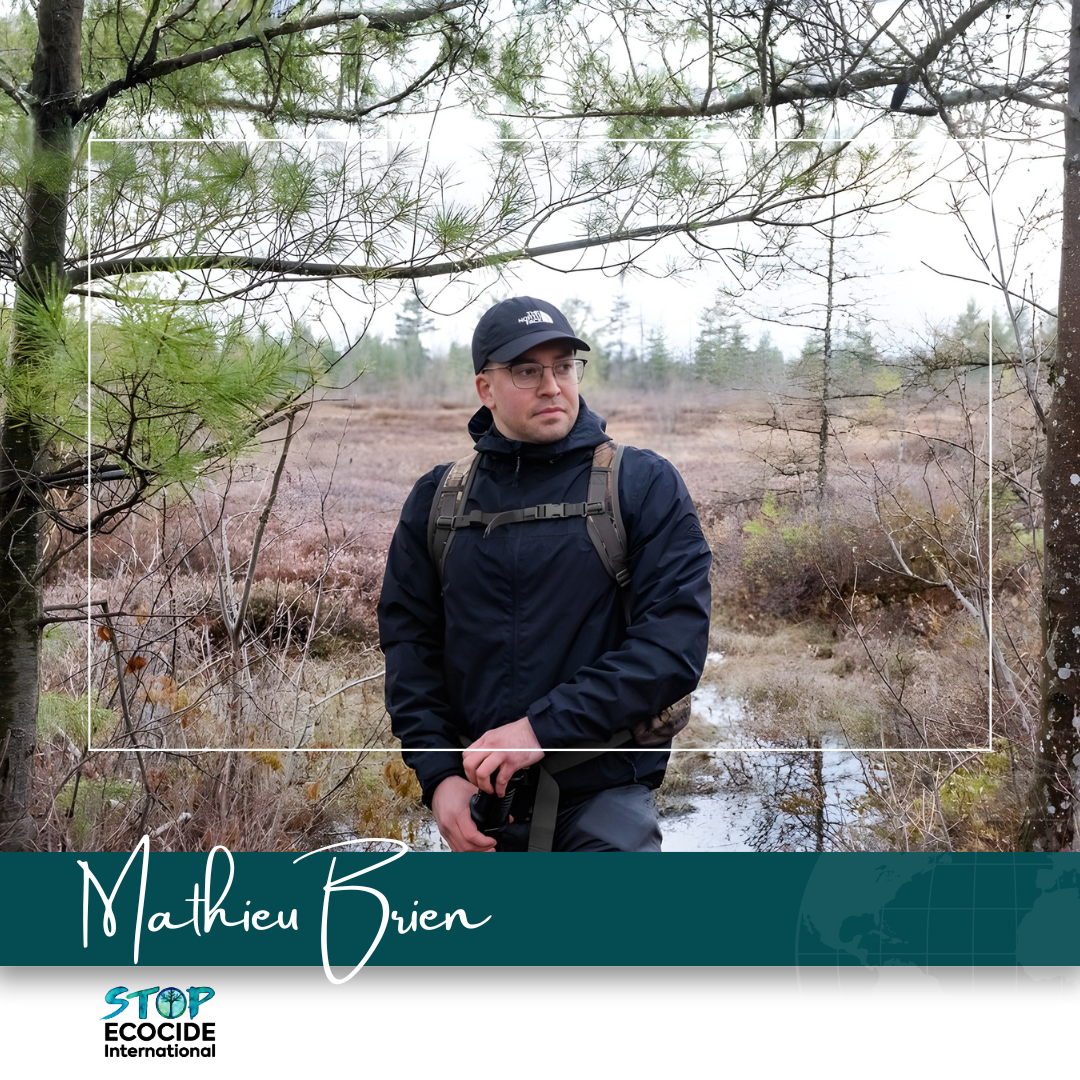
This guest blog is authored by Mathieu Brien, Founder of Carnivorex and the movement Sauvegardons la Grande Tourbière de Blainville (Save the Great Peatbog of Blainville).
In Blainville, Québec (Canada), a powerful confrontation is unfolding between the protection of living ecosystems and the advancement of industrial interests. The government’s approval of the expansion of the Stablex hazardous waste landfill, in the heart of one of the most valuable wetland complexes in the Montréal Metropolitan Community, reveals a troubling trend: ecology continues to be sacrificed for short‑term profit, despite climate commitments, scientific warnings, and citizen mobilisation.
The government’s decision contradicts Québec’s stated commitments to wetland and biodiversity protection, and it has sparked rare indignation. 47 academics have signed an open letter denouncing the decision as “nonsense,” physicians have raised the alarm, and ecologists have described the move as “pathetic.” All point to the same contradiction: while Québec claims to protect biodiversity and strengthen climate resilience, it authorises the destruction of an essential ecosystem. Prevention and accountability for this kind of destructive behaviour through criminal law is long overdue; we must urgently move to criminalise ecocide.
A millennia‑old ecosystem marked by an early trauma: the Bouchard Plan
To understand the current situation, we must look back. The Great Peatland of Blainville has been seriously harmed before. The first major disruption dates back to the Second World War, when the federal government established, in 1941, the Bouchard Plan: a massive industrial complex dedicated to the production of munitions for the war effort.
This complex, one of the largest in the country, stretched over several kilometres between Blainville, Sainte‑Thérèse, and Mirabel. It included explosives factories, storage depots, testing zones, and railway infrastructure. The peatland, located directly along its edge, was deeply disturbed by landfill, drainage, soil compaction, and widespread pollution.
It survived — but weakened, fragmented, vulnerable. Today, history seems to be repeating itself.
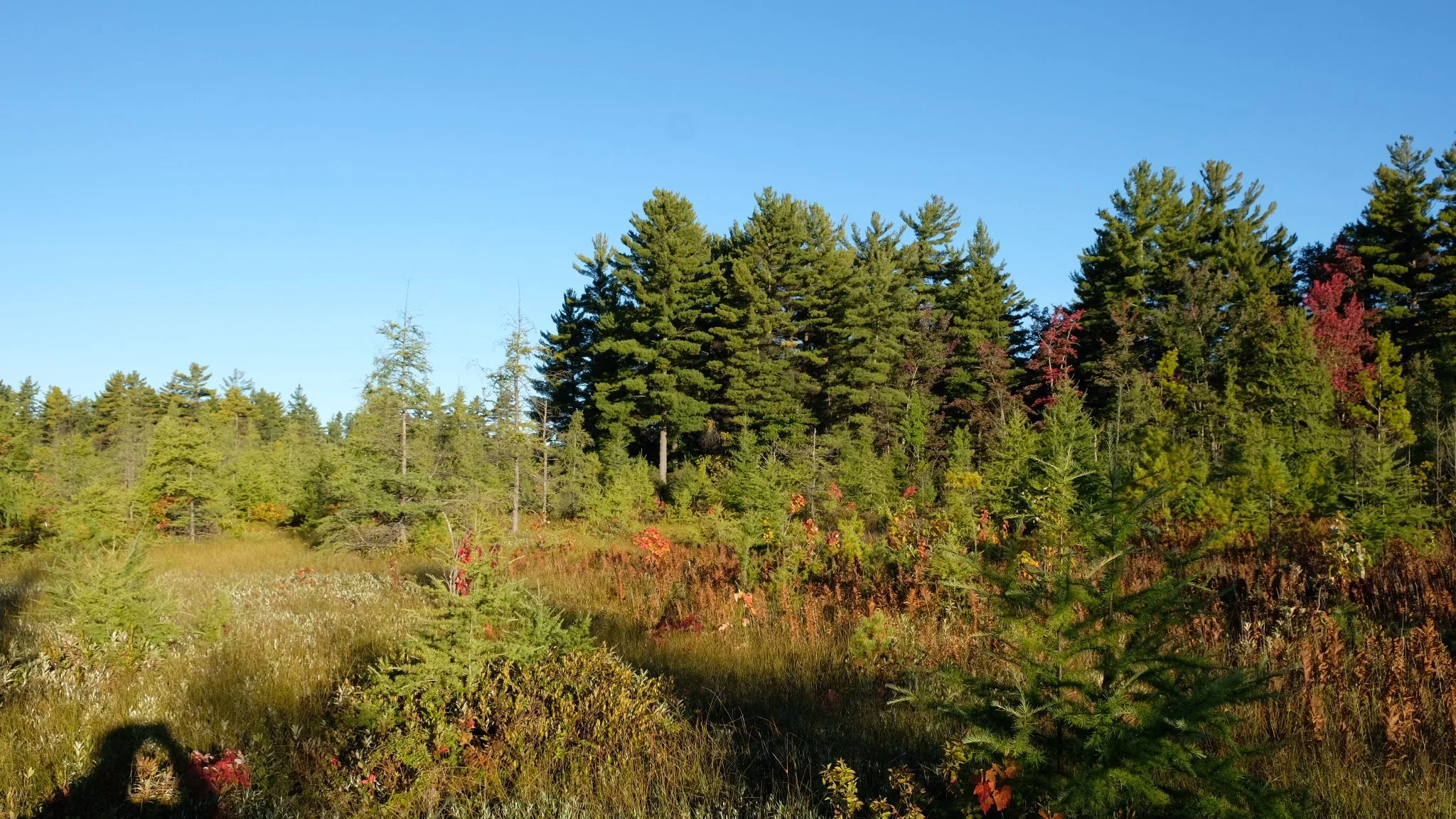
The Great Peatbog of Blainville.
A millennia‑old ecosystem threatened once again
The area targeted for the new Stablex expansion includes 278,000 m² of wetlands, forested zones, and habitats for threatened species. It lies within an ecological corridor linking two major natural complexes. Immediately adjacent is the Great Peatland, already weakened by its industrial past.
And yet, despite historical and contemporary pressures, approximately 600 hectares of the Great Peatland of Blainville remain intact.
These 600 hectares form one of the largest still‑functioning wetland complexes in the metropolitan region. They provide refuge for:
Nearly 200 bird species
Threatened amphibians and reptiles
Rare carnivorous plants
Biodiversity that is now rare in southern Québec
A massive carbon reservoir accumulated over millennia
These 600 hectares are proof that the peatland still breathes. And this is precisely why we are applying sustained and determined pressure to secure an official, permanent, and robust protection status.
Such protection would finally prevent industrial actors from continuing to alter its condition, fragment it, drain it, or degrade it under the pretext of economic development. It would be a historic step, consistent with Québec’s climate commitments and aligned with the best international conservation practices.
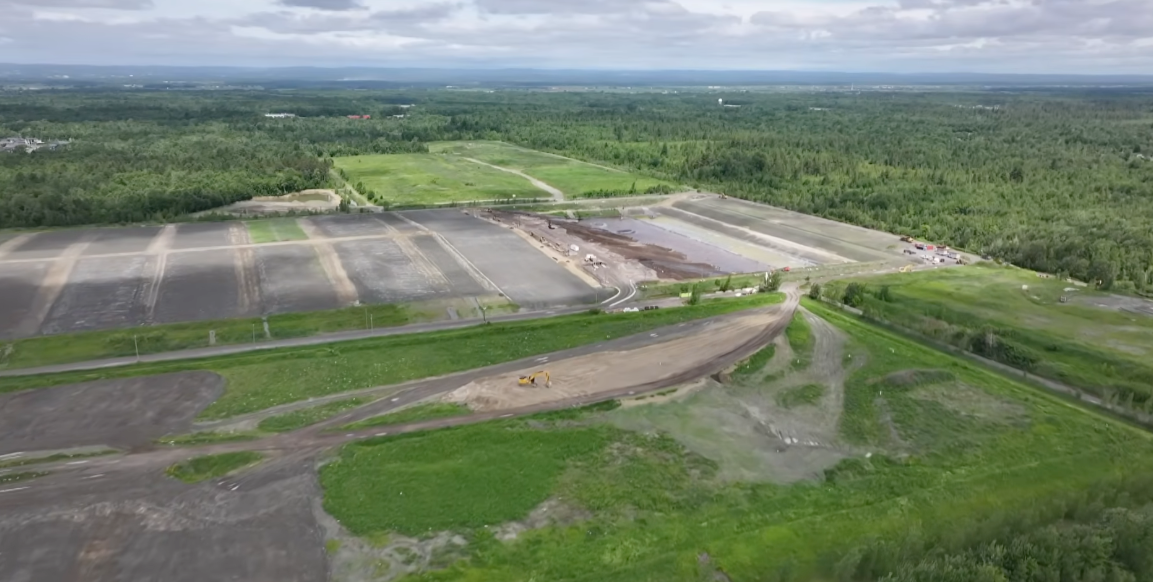
The Stablex hazardous waste site.
A decision at odds with science
Experts consulted by Le Devoir are unanimous: wetlands are essential for reducing flooding, mitigating heat islands, protecting biodiversity, and strengthening climate resilience. Quebec’s public environment agency, BAPE, recommended rejecting the landfill expansion. The City of Blainville and the Montréal Metropolitan Community sought to protect the area.
Despite this, the government chose to proceed, even expropriating the City to facilitate the project. This decision illustrates a familiar pattern: when the conservation of ecosystems becomes “inconvenient,” environmental laws are bypassed, weakened, or suspended.
A symptom of a global problem
What is happening in Blainville is not an isolated case. It is a symptom of a global issue: the deliberate destruction of essential ecosystems in the name of immediate economic interests.
International tensions surrounding toxic waste, documented by outlets such as The Guardian, show that hazardous‑waste management is often driven by commercial logic rather than the protection of life.
The Great Peatland of Blainville has become one of these sacrifice zones.
Ecocide enters the public debate
Momentum toward recognising ecocide as a crime has accelerated across continents in recent years. Among many exciting developments, the European Union has incorporated ecocide-level provisions into its Environmental Crime Directive, and Vanuatu, Fiji, and Samoa have submitted a formal proposal to make ecocide a crime at the International Criminal Court, a proposal that is now also championed by the DRC. Several national jurisdictions across the world are also formally considering national ecocide legislation. .
As I argued in an article for La Presse, this legal evolution is directly connected to what is happening in Blainville. The article underscores three key points:
The peatland is already a national symbol of ecocide
The destruction of a millennia‑old ecosystem fits the very definition of ecocide
Canada is dangerously behind in establishing legal protections
In other words: Blainville is a textbook example of why ecocide must become a crime.
Mobilisation: a collective rejection of ecocide
In response to this alarming situation, citizen mobilisation is intensifying. Through Carnivorex and the movement Save the Great Peatland of Blainville, we have welcomed hundreds of people into the peatland. Many discovered a landscape they never knew existed. Many were shocked. Many decided to act.
This movement is not nimbyism. It is a collective rejection of ecocide.
Why ecocide must be recognised as a crime
The movement to recognise ecocide as a serious crime is gaining momentum worldwide. As the example of Blainville shows, growing support is necessary because administrative penalties have proven inadequate as deterrents against environmental destruction. In contrast, criminal law imposes penalties that match the scale of the harm and deter the worst damage to nature.
This deterrence mechanism ensures that economic interests are not the only factor in decision-making processes, but instead are balanced alongside ecological considerations. Reshaping decisions at the highest level is vital to ensure prevention. It is always easier to protect nature than to attempt restoration after the damage is done.
Recognising ecocide as a crime means protecting future generations, holding decision‑makers accountable, and giving ecosystems a legal voice.
Blainville: a global symbol of what is at stake
The Great Peatland of Blainville is not merely a local issue – it is a global symbol of what is at stake today. It represents the confrontation between an exploitative, extractive economic model and the urgent need to protect the living world.
We must send a clear message: the deliberate destruction of essential ecosystems will no longer be tolerated.
We need to recognise ecocide as a crime and, once and for all, protect the 600 hectares of the Great Peatland of Blainville that remain intact.
As long as it breathes, we will continue to fight for it and for all threatened ecosystems around the world.
Sign the petition: https://change.org/tourbiereblainville
Facebook page of the movement: https://Facebook.com/tourbiereblainville
Movement Website: https://sgtb.ca