The Universal Right of Presence and the Case for Ecocide Law
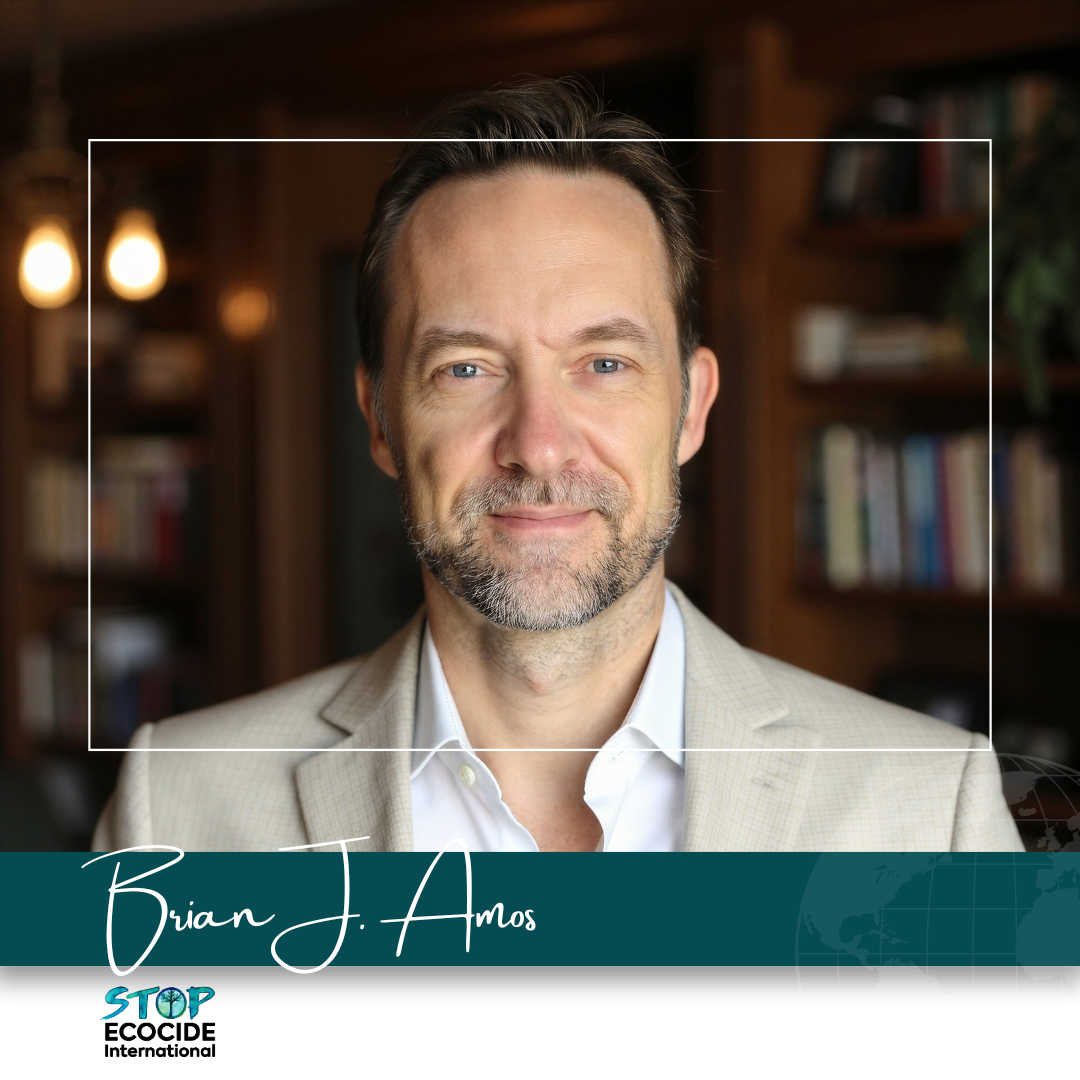
Brian J. Amos is a partner at an Intellectual Property law firm in New York City. Brian has both a JD law degree and a PhD, and is a graduate of UCL in London. He was formerly a neuroscientist at NYU Medical Center and has published in Nature Biotechnology and Oxford University Press.

A desert island. Credit: Jacob Nasyr via Unsplash
Imagine waking up on an unfamiliar island beside strangers from every corner of the world. None of you remembers how you arrived. None possesses a deed, a flag, or a claim of inheritance. For a brief moment before ideology, hierarchy, or fear takes hold, something remarkable would likely occur: each person would recognise that no one present has any greater right to the island than anyone else.
That fleeting intuition matters.
Before law, before culture, before conquest, there is a simple recognition that presence itself confers standing. Each person is there. Each therefore belongs there no less than the next.
Now extend the thought experiment one step further. What about the other living beings already on the island — the birds, insects, mammals, trees, fungi or the coral reefs offshore? Would we instinctively recognise their equal claim to exist there as well?
We posit that most modern societies would not. Particularly in the industrialised world, we are conditioned to view the Earth not as a living community of which we are part, but as property. Forests become "timber." Oceans, and indeed their inhabitants, become "fisheries." Living ecosystems become "natural resources." Even the destruction of entire ecological systems is softened into sterile euphemisms like "habitat loss."
Underlying this language is an unspoken assumption: that humans possess a superior claim to existence over all other species. It is, in effect, a form of human supremacism.
But on what basis does that claim rest?
Some religious traditions assert, or are interpreted to assert, that the Earth, the entire planet, was given to humanity for dominion. Other ideologies justify human dominance implicitly through power itself: humans prevailed technologically, and therefore humans rule all. Yet few people genuinely believe that might alone creates moral legitimacy. Many societies reject that principle in human affairs because history has repeatedly demonstrated its horrors and falsity.
Why, then, do we accept it in our relationship to the rest of life on Earth?
Not all cultures do. Jain philosophy regards all living beings as worthy of compassion and moral consideration. Many Indigenous traditions understand humans not as masters of nature but as participants within an interconnected living order. Some Aboriginal Australian/Torres Strait Islander cosmologies reject the very idea of human separation from the natural world. Beliefs from the Amazon to Papua New Guinea recognise animals as relatives or ancestors even (and long before we understood that in the West via understanding of evolution and genomics). Across cultures untouched by industrial modernity, one repeatedly finds the same intuition: humans are part of life, not owners of it, and everything has a right to be here.
Even developmental psychology offers hints that this view may be more fundamental than we assume. Studies suggest that young children do not automatically rank human life above all animal life until cultural conditioning teaches them to do so.
Strip away inherited assumptions, then. Remove the idea that divine decree grants humanity ownership of Earth. Reject the proposition that technological superiority creates moral entitlement. What remains?
We return to the island. We return to that brief, honest moment when presence itself appears to be the only legitimate basis for belonging.
This recognition is the basis of what can be called the Universal Right of Presence. Put simply, the Universal Right of Presence is the principle that every extant species possesses an inherent right to exist by virtue of its prior existence.
This is not sentimentality. It is moral consistency.
Every species alive today represents an unbroken thread in a chain of life stretching back approximately 3.7 billion years. That number deserves to be written in full because its scale borders on the incomprehensible: 3,700,000,000 years of survival, adaptation, evolution, catastrophe, and continuity. Every species is a living expression of that ancient inheritance.
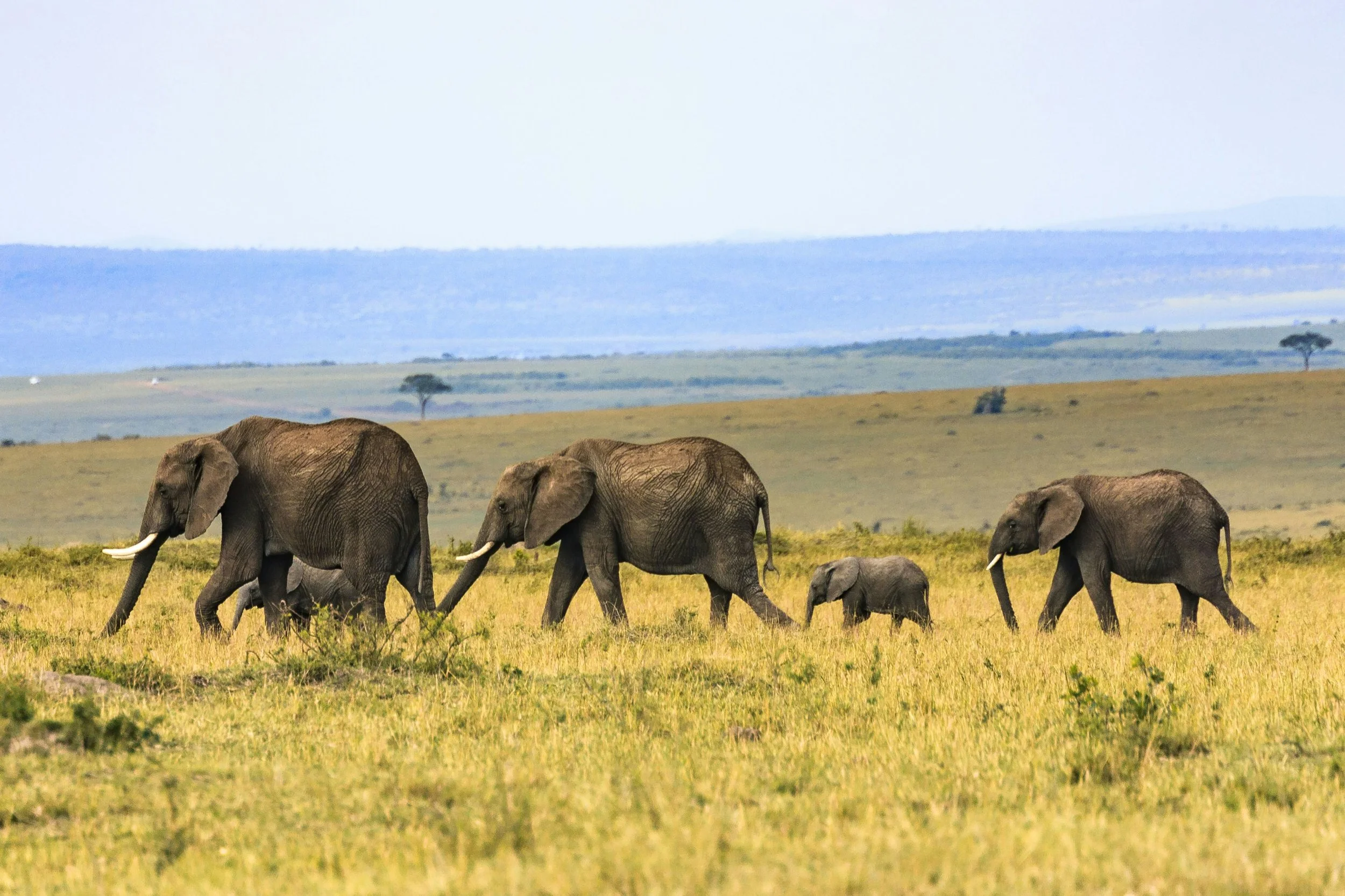
Elephants in the Masai Mara, Kenya. Credit: Larry Li via Unslpash
So, by what moral authority (not might) does humanity extinguish one of those lineages for convenience, luxury, or profit? The Universal Right of Presence argues that we possess no such authority.
Importantly, this is not an argument against predation, death, or ecological interdependence. The right belongs to species collectively, not to every individual organism. Life on Earth has always involved consumption and competition. But there is a profound moral distinction between participating within ecological systems and consciously driving species toward extinction. This places a special onus on humans.
Humans are unique not because we alone matter, but because we alone possess the demonstrated capacity to foresee planetary consequences and organise our behaviour around abstract ethical principles. With that capacity comes responsibility.
To recognise a Universal Right of Presence would mean accepting a basic obligation: humanity must not knowingly, or through reckless disregard, eradicate other species or reduce them below viable existence.
This is language echoed by those seeking to establish ecocide - the mass destruction of nature - as a serious crime across the globe. In 2021, an Independent Expert Panel of international lawyers defined ecocide as "unlawful or wanton acts committed with knowledge that there is a substantial likelihood of severe and either widespread or long-term damage to the environment." Ecocide law targets individuals in positions of power: corporate executives and government officials who authorise decisions that cause mass environmental harm. It sets a new moral and legal boundary beyond which it is no longer acceptable to act.
Such an idea may sound radical. But did not most all expansions of moral concern once sound radical? The abolition of slavery was radical. The idea of Universal human rights was radical. The notion of legal equality across race and sex was radical. Environmental protection itself was once dismissed as naïve idealism. Even the concept of ecocide — now increasingly debated in policy circles and incorporated in more and more national legal systems — was within living memory treated as fringe rhetoric.
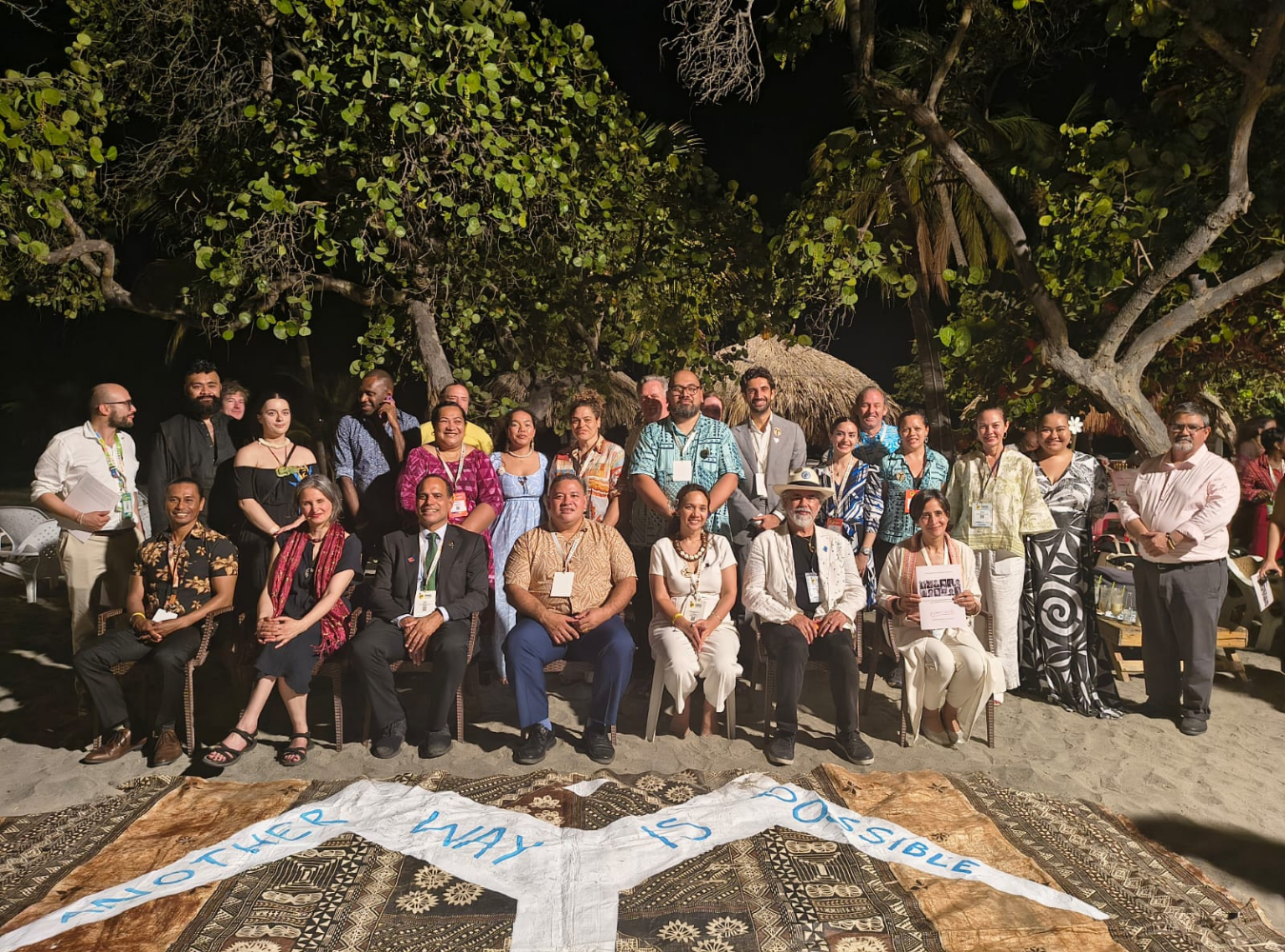
A diplomatic reception about ecocide law co-hosted by the Republic of Vanuatu and the Kingdom of Belgium at the First Conference on the Transition Away from Fossil Fuels in Santa Marta, Colombia.
In 2024, Vanuatu, Fiji and Samoa submitted a formal proposal to recognise ecocide as a fifth international crime at the International Criminal Court, alongside genocide, crimes against humanity, war crimes and the crime of aggression. Ecocide law is gaining gaining regional momentum across Latin America, Europe and Africa and new domestic crimes of ecocide are being proposed almost every week.
Moral progress often begins as a change in perception before becoming a change in law. And perception is already shifting.
Younger generations increasingly reject the assumption that human consumption automatically outweighs ecological survival. They question industrial agriculture, mass extinction, extractive economics, and endless growth. They are more likely to see animals as sentient beings, ecosystems as morally significant, and environmental destruction as an ethical failure rather than an unfortunate side effect of progress.
Scientific research, too, continues to erode old assumptions of human exceptionalism. Researchers increasingly document grief, joy, play, memory, social attachment, cooperation, and even forms of culture across numerous species. Numerous traits once mistakenly claimed as uniquely human appear instead on a continuum throughout many species. The old, contrived boundary between "us" and "Nature" grows harder to defend.
Recognising a Universal Right of Presence would not end human civilisation, nor agriculture, nor development. But the recognition of this Right would fundamentally affect the moral framework within which those activities occur. It would mean that extinction caused by conscious human action is not merely economically regrettable or aesthetically unfortunate, but ethically wrong.
We already look back upon the extermination of species like the passenger pigeon, Steller's sea cow, the thylacine as morally indefensible. Future generations may view many current practices the same way. Over 10,000 species go extinct each year. Who can look at the last two Northern White Rhinos — both female — and not see the utter irresponsibility and shame attached to humanity's actions leaving that lonely pair?
The Universal Declaration of Human Rights emerged after humanity confronted atrocities so immense that the world could no longer ignore them. Ecocide law is being built on the same logic: that some harms are so severe, so widespread, so irreversible, that they demand not regulation but criminalisation. The Universal Right of Presence and ecocide law are, at their core, the same argument arriving from different directions. One asks us to recognise that other species have a right to exist. The other says that those who destroy the conditions for that existence should be held personally accountable. Together, they point toward a world in which the living systems that sustain all life are protected not merely by policy, but by law.
Can humanity expand its moral imagination before irreversible loss forces the issue upon us? Must ecological collapse and mass extinction become equally catastrophic before we recognise that other forms of life possess a legitimate claim to continued existence?
Let us answer that question before it is too late. The Universal Right of Presence asks us to abandon the assumption that humanity owns the living world simply because it can dominate it. And it asks us to recognise a truth that many cultures, philosophies, and perhaps even our own instincts have long understood: that no species arrived here or exists here with a greater right to existence than any other.