
No jail time for "Brazil's worst environmental disaster"? This is exactly why Brazil needs to criminalise ecocide.

This guest blog is by Pricila Cardoso de Aquino, a PhD candidate in Socio-Environmental Law at the Pontifical Catholic University of Paraná (PUCPR) and the Climate and Latin America Coordinator at the Environmental Defender Law Center (EDLC).
This article was first published in the Brazilian outlet Valor Econômico. You can access the original (in Portuguese) here.
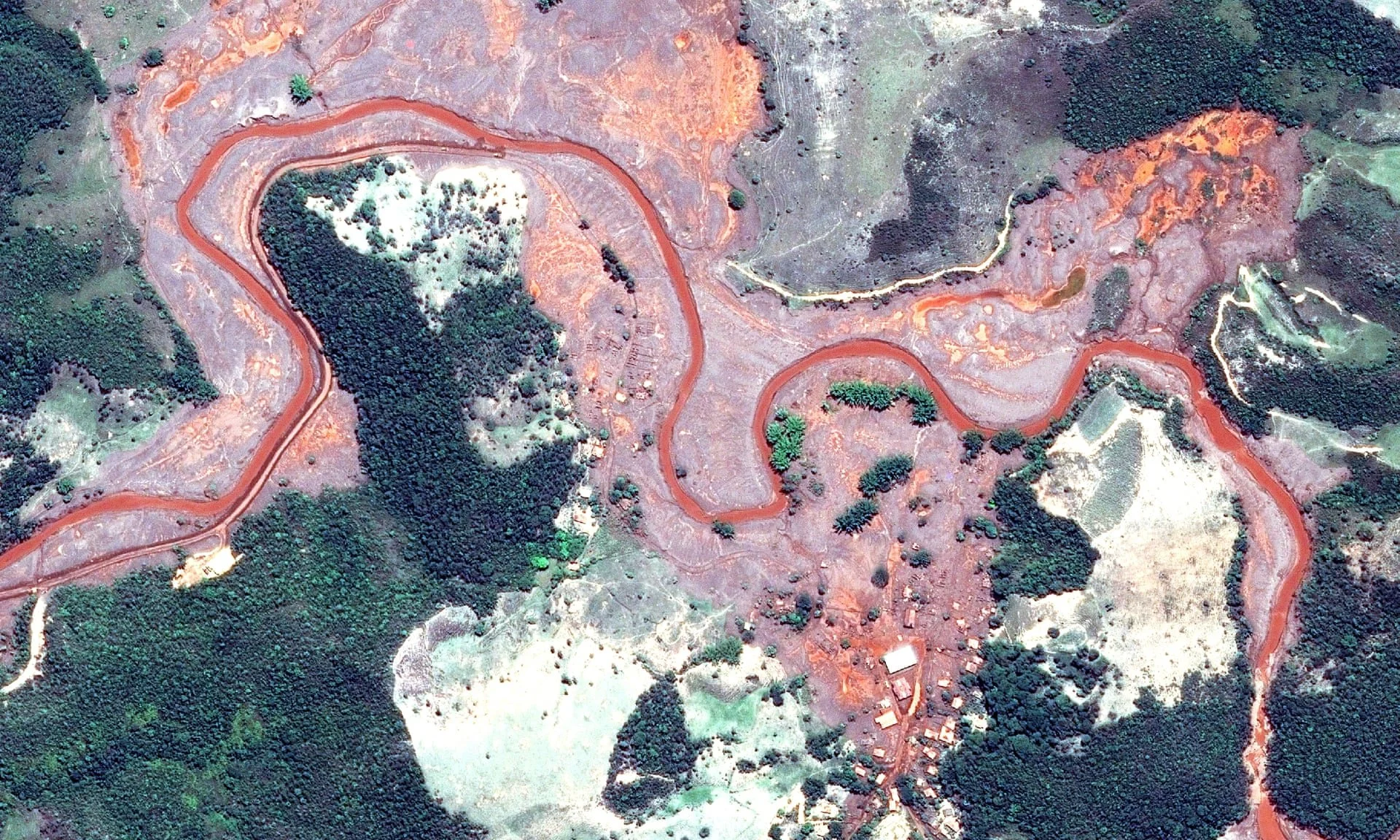
Damage to the surrounding environment one week after the dam collapse, 12 November 2015. ©CNES 2015 Distribution Airbus DS.
Ten years after the collapse of the Fundão dam in Mariana, London’s High Court has finally reached a decision. In November 2025, the Court recognised the liability of mining company BHP, under Brazilian law, for what is widely considered the largest environmental disaster in the country’s history.
On November 5, 2015, the collapse of the dam released more than 40 million cubic meters of toxic tailings. Nineteen people died. The district of Bento Rodrigues was destroyed. The Rio Doce was contaminated for 600 kilometres, all the way to the ocean. Today, more than 600,000 people are part of the lawsuit, with damages estimated at 22 billion euros, approximately 132 billion reais.
The decision is important. It affirms that a multinational cannot profit from a high-risk operation, exercise control over it, and, in the face of catastrophe, hide behind its corporate structure. It also signals a relevant trend: courts are increasingly willing to examine parent company liability for damage caused by subsidiaries, including in transnational contexts.
But there is a crucial point that remains unchanged: the key decision-makers who created the conditions for this disaster face no personal criminal liability. Civil litigation can compensate, reveal facts, and assign responsibility. But it is a limited instrument when what is sought is deterrence of criminal conduct. The Mariana case took a decade, mobilised hundreds of thousands of victims and their family members, required extraordinary legal resources, and was only possible due to an exceptional circumstance: BHP's parent company being listed in the United Kingdom. This is not a system designed to prevent; it is an exceptional pathway, a belated response to a tragedy already consummated.
When extreme environmental destruction is treated only as a financial cost, the message to corporate boards is weak. Even billion-dollar settlements can be absorbed, insured, or delayed for years through appeals and agreements. Criminal law does something different. It establishes a boundary. It reaches individuals. It tells decision-makers that certain risks are simply unacceptable.
It is in this context that the proposal to criminalise ecocide gains relevance.
The contemporary idea was developed by Barrister Polly Higgins, who advocated for recognition of the most serious forms of environmental destruction as equivalent to genocide and crimes against humanity. In 2021, an independent panel of experts proposed a legal definition that has been guiding this debate: unlawful or wanton acts committed with knowledge of a substantial likelihood of causing severe and either widespread or long-term environmental damage.
What has changed in recent years is that this is no longer merely a bold idea.
The EU‘s revised Environmental Crime Directive (2024) requires Member States to criminalise conduct ‘comparable to ecocide’ and, in parallel, the Council of Europe’s Convention on the Protection of the Environment through Criminal Law (which opened for signature in December 2025) introduces a category of acts ‘tantamount to ecocide’.
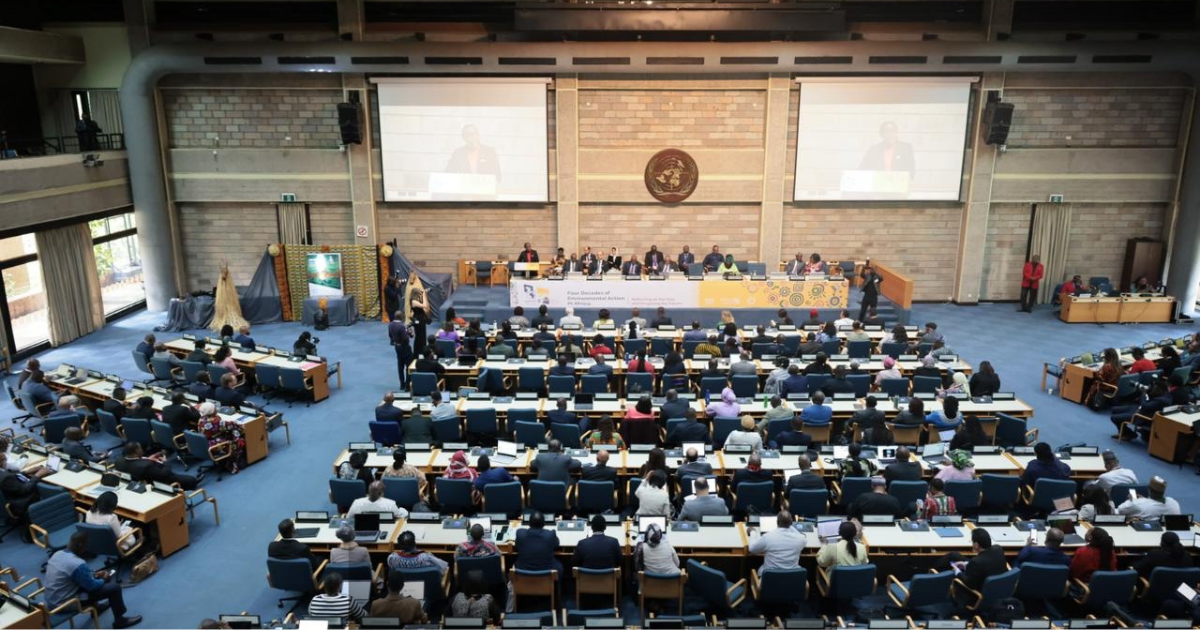
In July 2025, Africa’s environment ministers agreed to include ecocide in the continent’s top strategic environmental priorities for 2025-27.
The African Ministerial Conference on the Environment (AMCEN) has included ecocide among its strategic environmental priorities for 2025–2027. Internationally, a formal proposal to include ecocide as a core crime in the Rome Statute of the International Criminal Court was presented in 2024 by a coalition of states led by Vanuatu, including Samoa and Fiji.
Brazil is not removed from this movement. In 2023, the Chamber of Deputies’ Environment Committee approved Bill No. 2,933, which proposes the criminalisation of ecocide in Brazilian law, with sentences of up to 15 years in prison for those occupying senior decision-making positions. Brazil is among scores of states progressing domestic ecocide legislation right now, including India, Ghana, the Philippines, French Polynesia, the Netherlands, Italy, Scotland and Peru.
The Mariana case demonstrates why this debate is urgent.
If such a law were approved, disasters of this magnitude would not be treated merely as matters of compensation. Decisions that create known risks of catastrophic harm could generate direct criminal liability.
This is not about replacing civil liability, which remains essential. Nor about criminalising every environmental disaster. It is about recognising that there are situations where the harm is so severe, the risks so evident, and the consequences so extensive that the legal response needs to go beyond compensation. Mariana clearly exposed the gap between compensation and deterrence.
If it is possible to make decisions that release millions of cubic meters of toxic tailings, destroy entire communities and contaminate ecosystems for hundreds of kilometres, and the worst consequence for those responsible is that the company eventually pays, then the law is not yet fulfilling its maximum function.
Ecocide law would not replace civil actions. It would complement them. It would introduce personal criminal accountability in the most serious cases, where the harm is extreme, the risks were known, and the destruction goes beyond private losses, affecting ecosystems and communities.
Is it acceptable that disasters of this magnitude do not result in individual criminal accountability? If we want to take the prevention of the next Mariana seriously, this is exactly the question the law must now respond to.