
Polluting the Fjords: Why Norway needs an ecocide law

This guest blog is authored by Mitch Holson, a photojournalist and filmmaker covering conflict, climate, and the Far North.
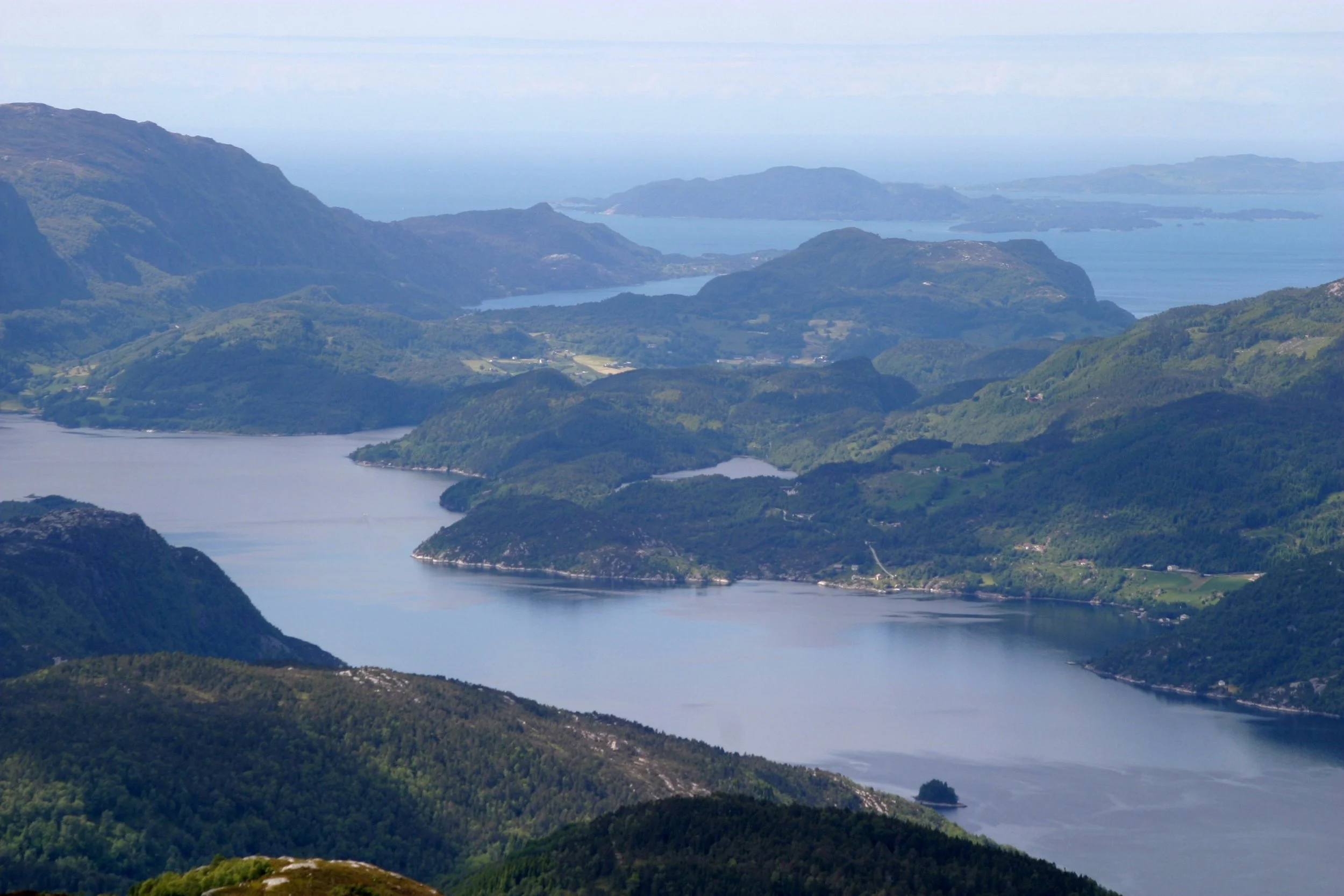
View over Førdefjord. Image Credit: Arild Finne Nybø via Flickr.
In 2015, Norway granted a mining company permission to discharge 250 million tons of industrial waste into one of its own fjords.
Nordic Mining would extract minerals from the Engebø Mine and deposit the waste, known as tailings, directly into Førdefjord - one of the country’s protected National Salmon Fjords and a spawning ground for cod, connecting the open sea with a protected river.
When a lawsuit brought by Friends of the Earth Norway successfully challenged the government’s decision, it was expected that the mine’s ability to discharge waste would come to an immediate halt. Instead, the Ministry of Climate and Environment allowed Engebø to continue depositing tailings into Førdefjord while a new permit application was processed. A year on, with tailings still flowing, the Norwegian Environment Agency has recommended granting a temporary permit for three more years.
A few hundred kilometres north, a Canadian mining company called Blue Moon Metals holds a discharge permit to deposit 30 million tons of tailings into Repparfjord for its Nussir Copper-Silver-Gold Mine. A 2025 parliamentary vote to withdraw that permit failed 80 to 21, leaving it firmly in place.
This illustrates what enforcement looks like in Norway, revealing a destructive underbelly hiding behind a broadly accepted reputation for environmental preservation. Norway is one of only four nations in the world that still allow mine tailings to be discarded in submarine environments, joined by Papua New Guinea, Indonesia, and Turkey (two other countries - Greece and France - recently ceased the practice). Even more shockingly, Norway is one of only two countries that maintains an active regulatory framework to issue new permits for future dumping.
Despite the practice standing in the face of near-global opposition, the State maintains that this method causes the least ecological and social harm – the “best available technique”. The Engebø and Nussir mines reveal Norway's legal architecture as one built to absorb any challenges to environmentally destructive behaviour. A binding criminal framework for ecocide could finally close this gap between the law’s appearance and its protective function.
The Case for Submarine Tailings
The vast majority of global mine waste is discarded in on-land tailing dams, with only 16 out of 2,500 industrial-sized mines worldwide using sea disposal. Additionally, some mines choose to backfill their waste, a process of filling voids underground that were created when the ore was extracted. These methods are not without risk. For example, tailing dams can, and do, fail, nearly five per year on average. This, along with other consequences, is used by the Norwegian State to bolster support for submarine alternatives.
However, research on the long-term effects of submarine tailings remains extremely limited, with substantial scientific gaps muddying a clear understanding of potential ramifications. There is currently no internationally agreed, standardised test for the leaching of metals into fjord environments, nor any set threshold values for these metals, a key concern of environmental NGOs and Indigenous communities. Because of these limited studies, Norway is able to maintain a cautiously positive stance, acknowledging these uncertainties and downplaying potential risks simultaneously.
The “Best Available Technique”?
Despite the clear threat that submarine dumping poses, the government and mining companies frame their decisions in the language of science and regulation, asserting that ocean disposal represents what is known as the “best available technique” (BAT). The term originates in the world of environmental regulation and denotes the best practices to minimise environmental harm. So how does Norway get away with using this term to describe such a risky practice?
While Norway is not a member state of the EU, it does participate in the European Economic Area (EEA), a coalition composed of all EU states and three members of the European Free Trade Association (EFTA). This arrangement integrates Norway into conversations about European standards for environmental health, and legally binds it to adopt most EU environmental legislation.
However, how Norway interprets and implements this legislation remains partly national, allowing for flexibility in domestic enforcement. This is made visible when the State allows tailings to be dumped in the ocean, an interpretation of the EU Water Framework Directive and Mine Waste Directive. In this way, Norway is able to associate with, and adopt, important environmental legislation, but retains full autonomy to navigate in a manner consistent with domestic desire.
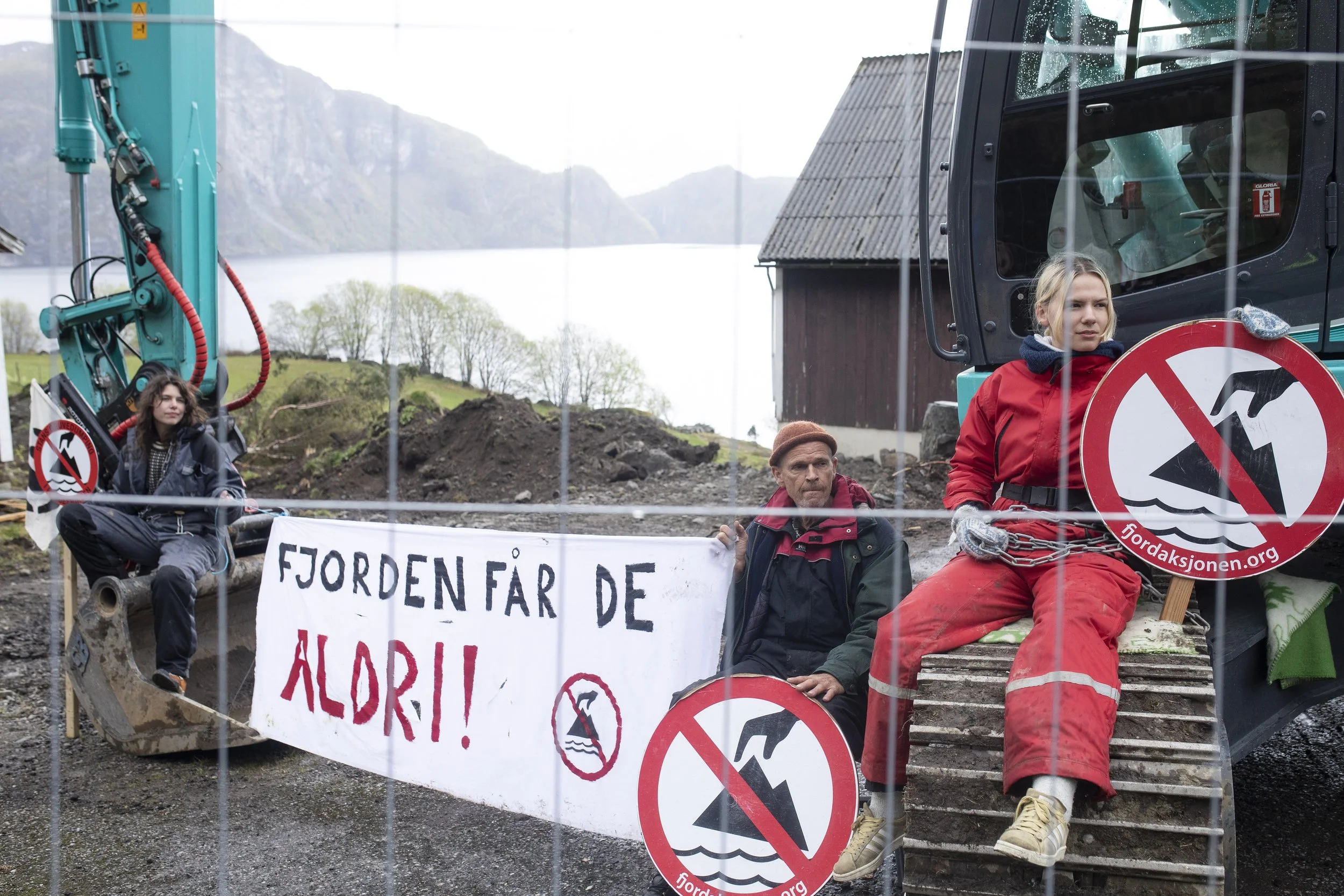
Protests against the Engebø mine, 2022. Image credit: Amanda Iversen Orlich.
EEA membership pressures Norway to justify submarine tailings disposal as being compatible with EU standards. But the limited understanding of the long-term impacts of submarine tailings in marine environments creates a grey area to exploit.
The European Commission, the executive arm of the EU, released a Best Available Techniques Reference Document (BREF) in 2009, which defines what counts as a BAT. Because interpretation alone leaves Norway’s position contestable, Norwegian actors lobbied to include submarine tailing disposal in this release. This is not because it would allow them to practice submarine tailing disposal, but because it would legitimise the practice, allowing Norway to describe the method as being in compliance with EU-level environmental standards, rather than simply exploiting a legal loophole.
Unsurprisingly, the EU refused to acknowledge Norway’s proposition, citing inadequate research on the implications of dumping tailings into the ocean. As of 2025, no subsequent BAT document has formally added submarine tailings disposal. Yet, Norway continues to use “BAT” as a descriptor, quietly absorbing the language of legitimacy it was twice denied.
The Case for Ecocide Law
Norway’s current legal system allows it to satisfy procedural requirements and avoid ever risking its preferred outcome, despite causing major environmental destruction. This is where introducing a crime of ecocide could be transformative.
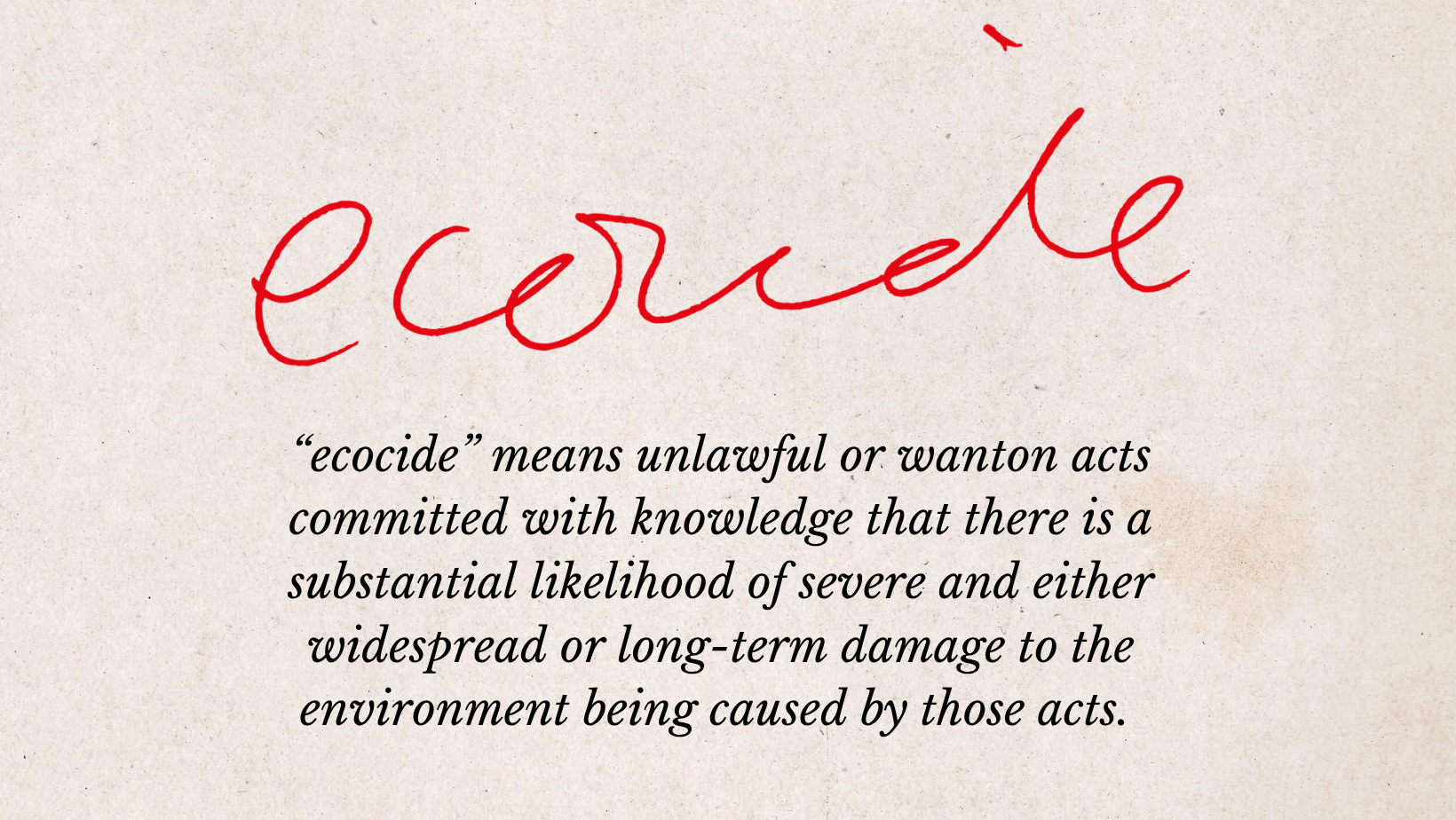
Independent Expert Panel for the Definition of Ecocide, 2021.
A legal definition formulated by an Independent Expert Panel in 2021 described ecocide as “severe and either widespread or long-term damage to the environment”. In other words, ecocide criminalises acts that could result in the most serious harm to nature.
Most environmental regulation works by restricting specific harmful methods, industry by industry. Ecocide law takes a different approach: it focuses on the scale of the resulting harm, not the method that caused it. This means decision-makers have to weigh environmental outcomes directly, whatever activity they are regulating. That matters most for new or poorly understood practices, where the risk to ecosystems is already clear, but where science or lawmaking has not yet caught up. Ecocide law can mitigate risks where regulation cannot.
A domestic ecocide framework could remove the ambiguity that currently allows governments to authorise continued dumping mid-litigation and set legal thresholds for tailings damage regardless of intent. What’s more, it could protect Sámi rights by moving from a consultation model to one with real criminal accountability.
Once considered a fringe idea, the criminalisation of large-scale destruction of ecosystems has firmly entered the mainstream. Around the world, ecocide legislation is being discussed, proposed, and passed. France, Belgium, Azerbaijan, and Mauritius have introduced domestic ecocide laws in recent years. Over fifteen more countries like Peru, Brazil, India, Scotland, and the Philippines are advancing ecocide law bills worldwide.
This shift is cementing itself across the EU in particular. The 2024 Environmental Crime Directive introduced stronger criminal penalties for major environmental harm, including a new category of offences “comparable to ecocide”. While Europe accelerates towards accountability and deterrence for ecocide, Norway now risks becoming an outlier.
As a state party to the Rome Statute of the International Criminal Court, Norway could also support the formal proposal by Vanuatu, Fiji, and Samoa to add ecocide to the Court’s remit.
Norway must move forward
I am not Norwegian, I am American. My baseline relationship to systems of power, namely governments, is one of deep scepticism. With Engebø and Nussir as two examples of justice deferred that I was able to witness firsthand, I am beginning to see echoes of my own country in a place that I formerly relied on for inspiration on environmental preservation.
Norway urgently needs guardrails like ecocide law to prevent the worst harm to ecosystems, or it risks moving further away from its role as a protector of nature that it has worked hard to preserve. I fear that, without these advances, collective waiting will become a form of governance in Norway.