
Iran calls for international crime of ecocide
Summary
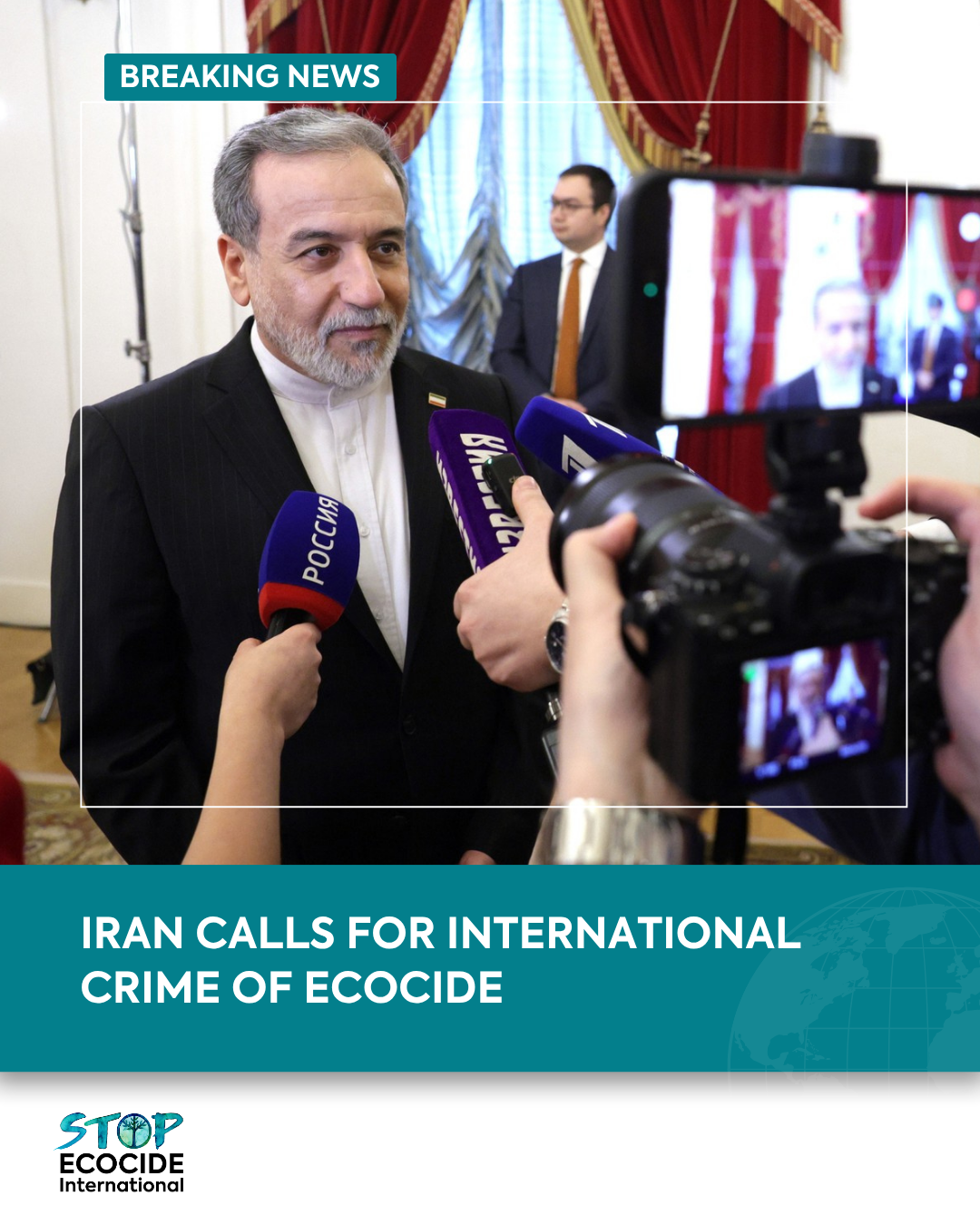
Iran's Foreign Minister, Abbas Araghchi, has expressed support for recognising ecocide as an independent international crime, amid concerns over environmental damage caused by military attacks on the country.
Speaking at an event titled “Ecocide: The Silent War Crime” in Tehran on 11 October, Araghchi called for stronger international legal mechanisms to prevent environmental destruction during armed conflict and hold those responsible accountable.
He said Iran supported recognising ecocide as an independent international crime and was ready to contribute its scientific, legal and diplomatic capacities to international efforts to address severe environmental destruction.
Araghchi also identified the forthcoming UN climate conference, COP31, as an opportunity to draw international attention to the environmental consequences of military attacks.
“Environmental protection must move beyond declarations of commitment and enter the realm of accountability, responsibility and effective international action,” he said.
The Foreign Minister highlighted environmental damage resulting from military operations in Iran, Gaza and Lebanon, including contamination of water and soil, destruction of natural habitats and damage to energy infrastructure. He warned that the consequences could be felt for decades.
Speaking at the same event, Iran's Vice President and Head of the Department of Environment, Shina Ansari, confirmed that the Iranian government had prepared reports documenting wartime environmental damage, including pollution, biodiversity loss and destruction of natural habitats, to support international legal action.
Referring to the United States' withdrawal from international environmental agreements, Ansari stressed the importance of continuing to draw international attention to the environmental damage caused in times of conflict, despite the challenges to international cooperation.
These latest statements follow several earlier interventions by senior Iranian officials explicitly invoking ecocide and calling for international legal accountability.
In March 2026, Ansari described strikes on Tehran's oil storage facilities as a “clear manifestation of ecocide”. Araghchi subsequently stated that the attacks “violate international law and constitute ecocide”, warning of potentially generational impacts on human health, soil and groundwater.
Also in March, Iran's Permanent Representative to the United Nations, Amir Saeid Iravani, formally raised the issue in a letter to the UN Secretary-General and Security Council, stating that attacks on Iranian oil infrastructure met the criteria of environmental crimes, including ecocide.
Coverage of the 11 October event, “Ecocide: The Silent War Crime”, is available from Iran's official state news agency, IRNA here. Coverage of the statements made by senior Iranian officials in March 2026 can be found here. Iran’s letter to the UN Security Council identifying attacks on its oil infrastructure as potential ecocide is available here.