
La huella invisible de la guerra: cuando la ley no alcanza
An interview with Rodrigo Lledó in which he answers some of the key questions regarding the potential of criminalising ecocide to hold those responsible to account for the mass pollution of the environment and the destruction of ecosystems, both in times of war and in times of peace.
María Paula Gómez for NTN24, 10/09/26
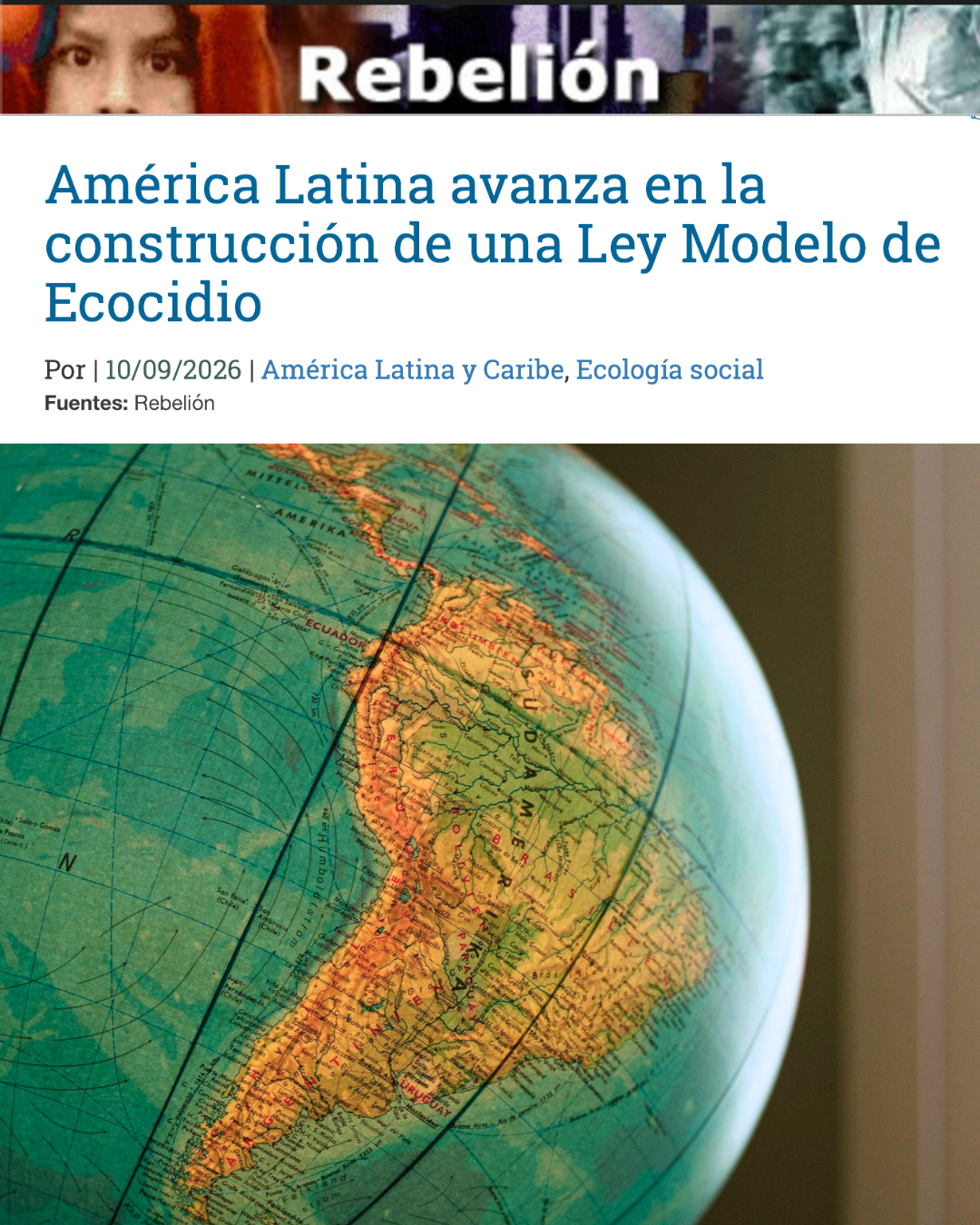
América Latina avanza en la construcción de una Ley Modelo de Ecocidio
The article provides information on the regional and collective process through which a model law on ecocide will be drafted in Latin America. It also explains the stages of this process and the ultimate aim of adapting the international definition of ecocide to the social and legal realities of Latin American countries.
Unknown Author for Rebelión, 10/09/26
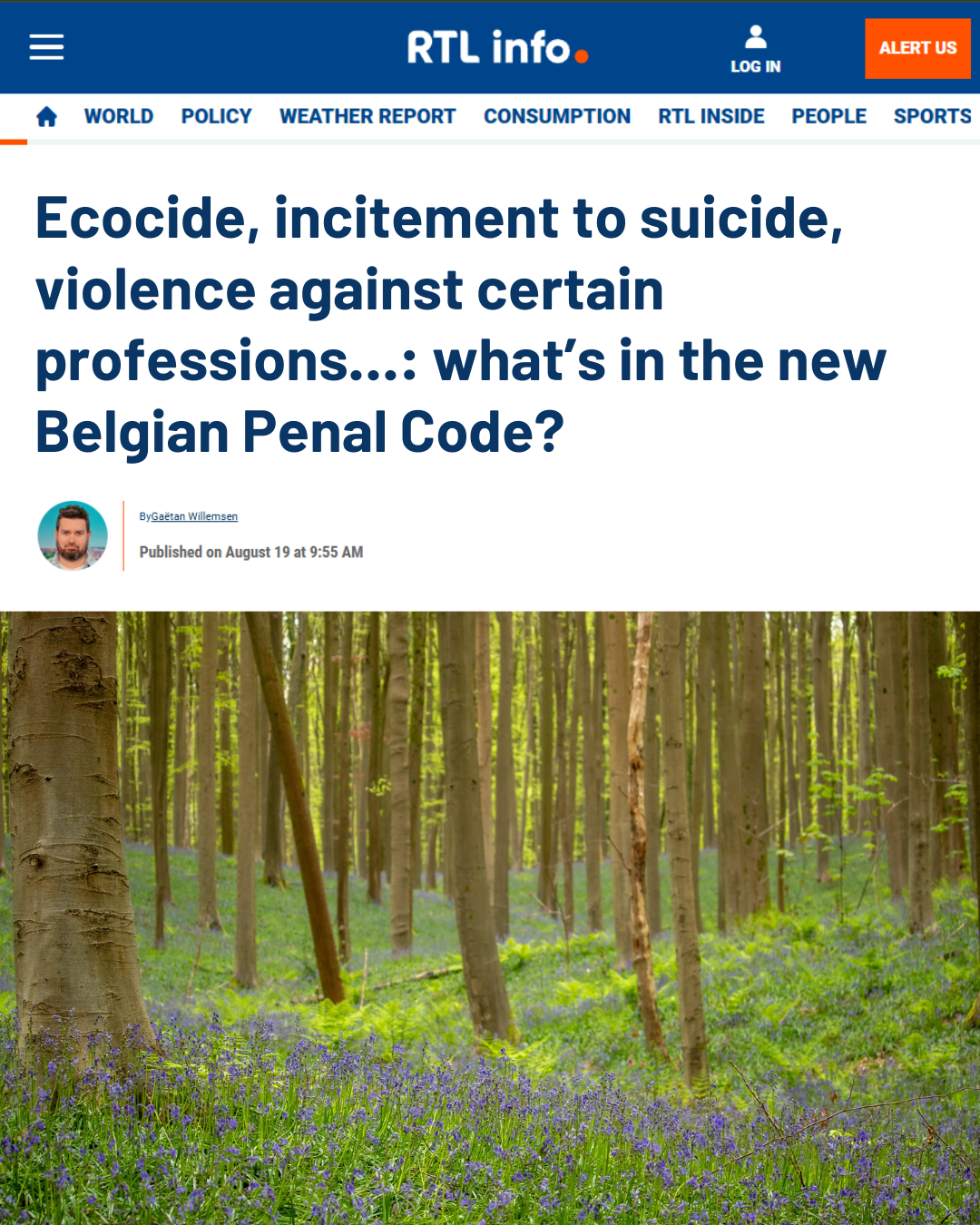
Ecocide, incitement to suicide, violence against certain professions…: what’s in the new Belgian Penal Code?
Willemsen reviews major changes in Belgium’s penal code from September 1st, among them, the introduction of the crime of Ecocide. This historic step has placed Belgium at the forefront of a growing global movement to criminalise the worst harms to nature.
Gaëtan Willemsen for RTL Info (Belgium), 19/08/26
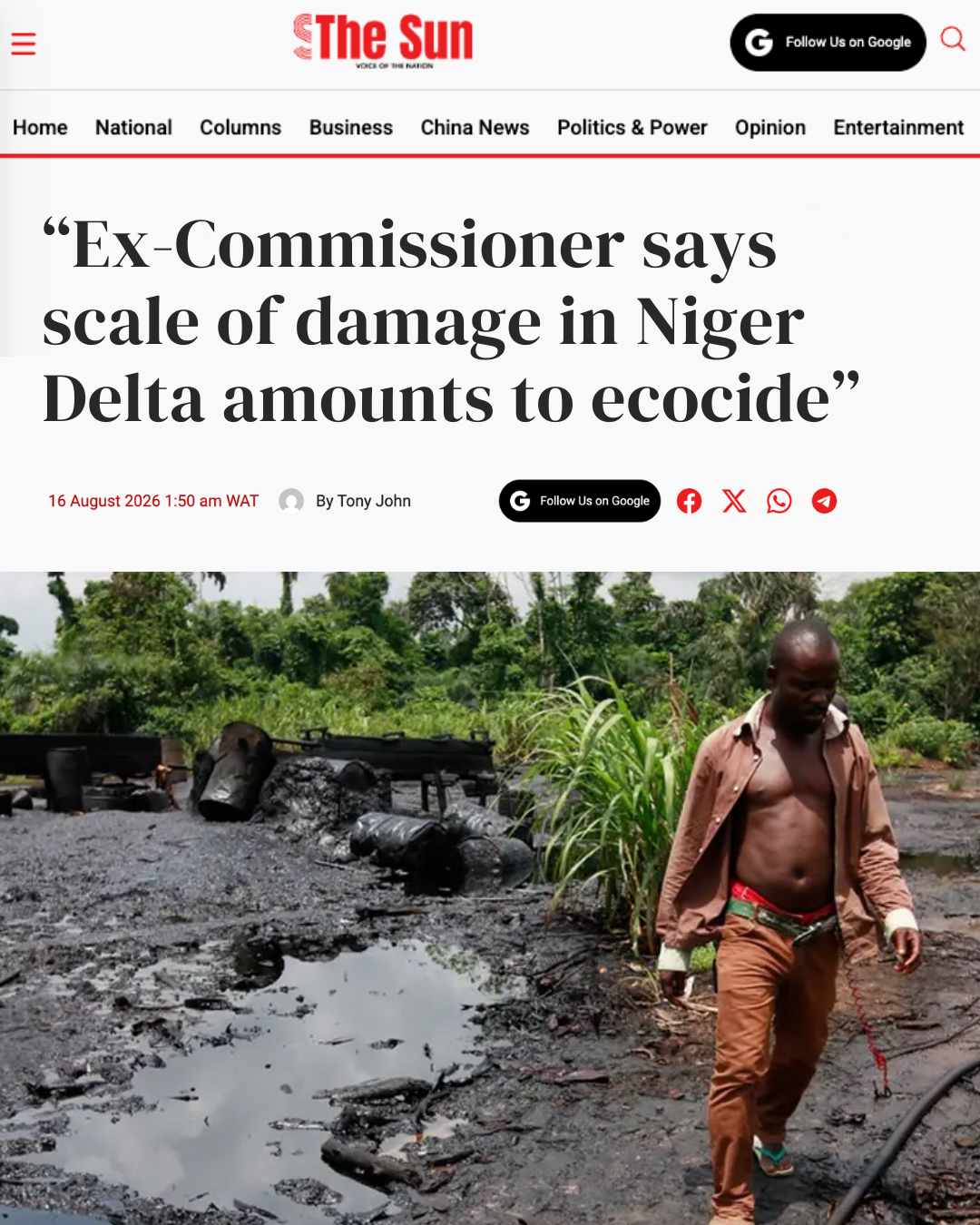
Ex-commissioner tasks Niger Deltans on oil pollution
Iniruo Wills, former state Environment Commissioner in Nigeria, has called for criminal accountability for large-scale oil pollution in the Niger Delta. Wills’ call showcases growing support in Nigeria and Africa for treating mass environmental destruction as a serious crime.
Tony John for The Sun (Nigeria), 16/08/26
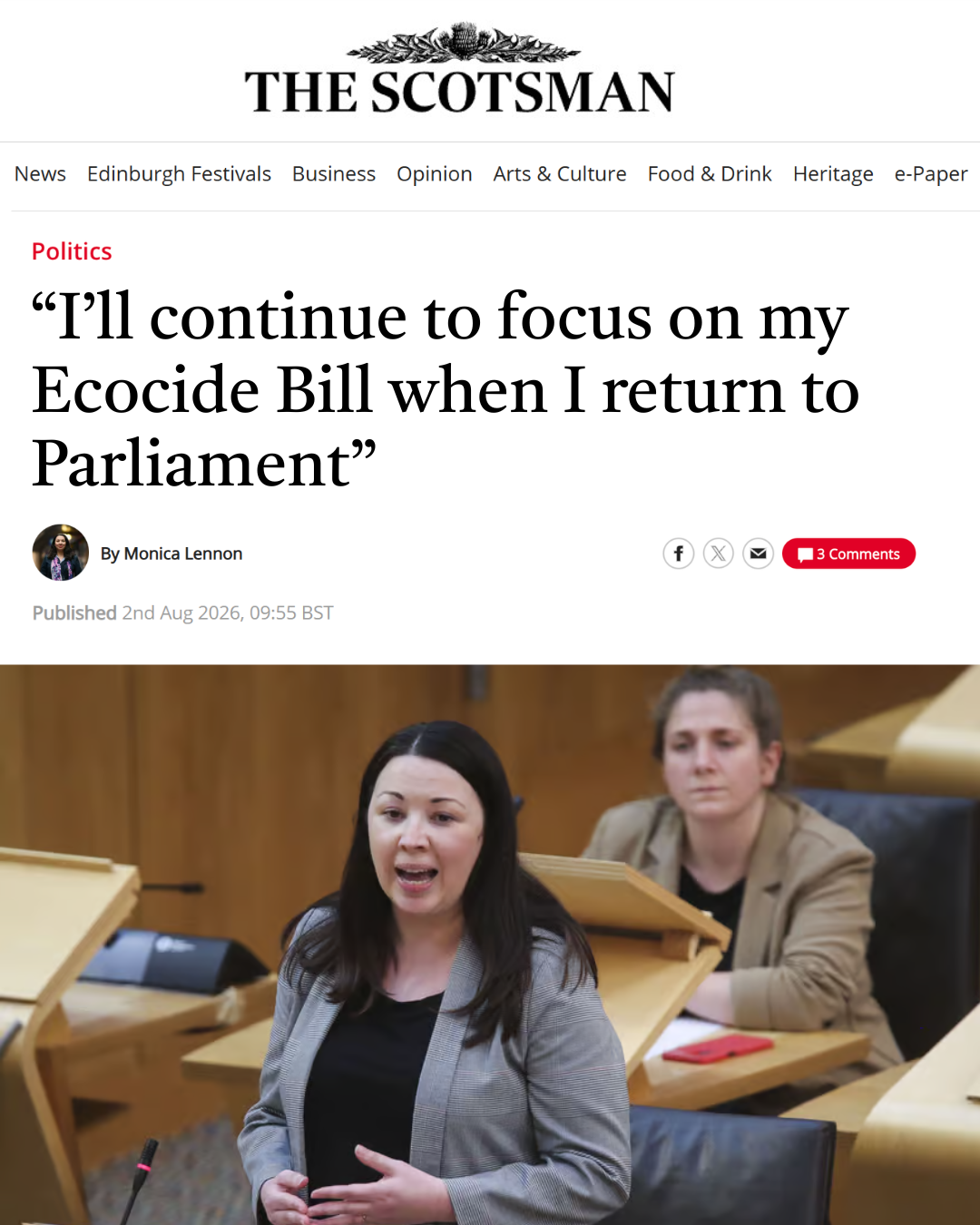
“I’ll continue to focus on my Ecocide Bill when I return to Parliament”
Monica Lennon reflects on her record as a Member of the Scottish Parliament, including her work championing the bill to criminalise ecocide in Scots law, which she cites as being among her biggest successes.
Monica Lennon for The Scotsman, 02/08/26
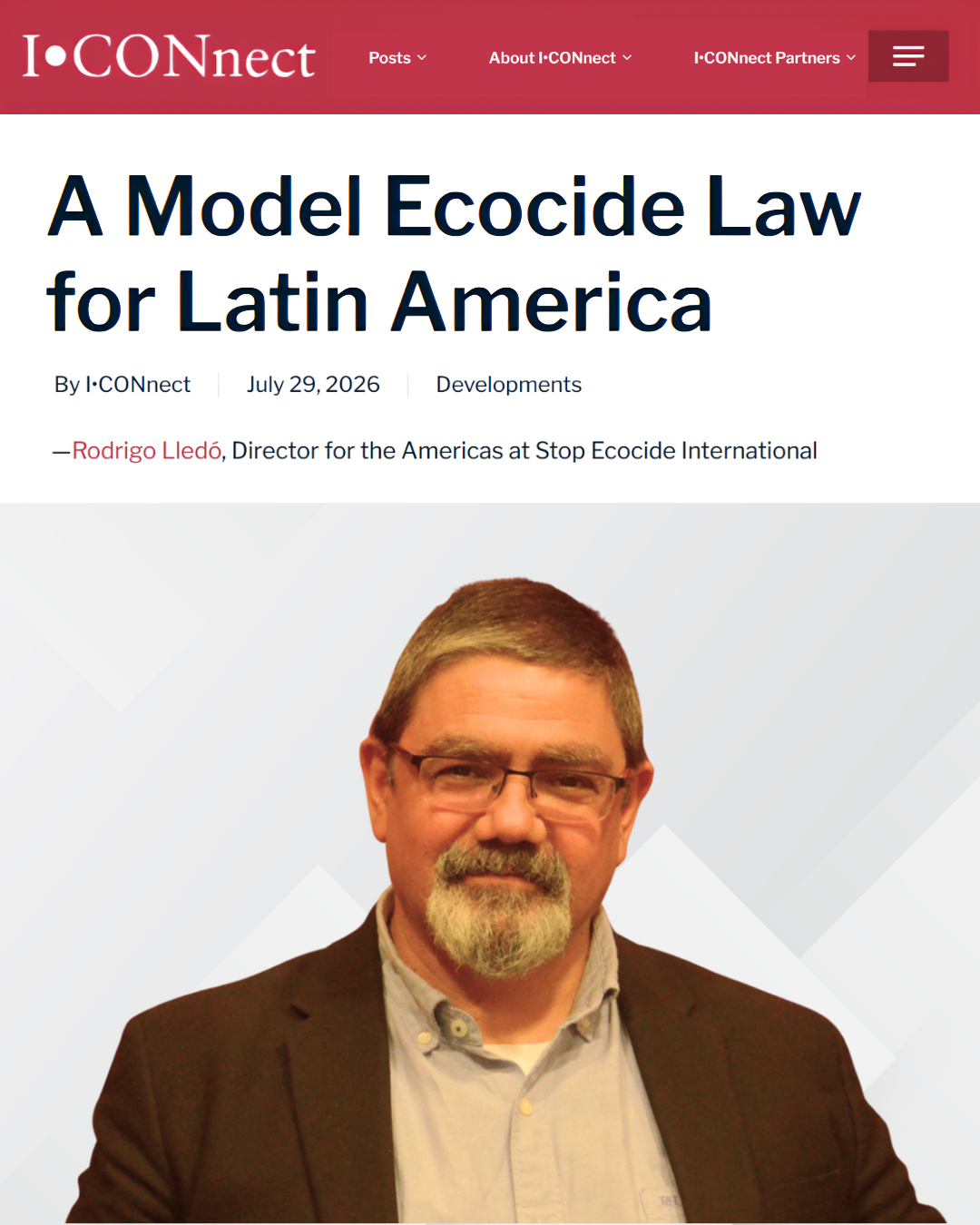
A Model Ecocide Law for Latin America
Rodrigo Lledó explains the participatory process in the development of a Model Ecocide Law for Latin America which brings together legal experts, academics, civil society and affected communities to develop a harmonised legal framework that can support future national legislation in the region.
Rodrigo Lledó for ICONnect, 29/07/26

Ecocide: the conversation I owe my son
Jorge Barona, a member of the Network of Ambassadors Against Ecocide, reflects on the impact of ecocide on future generations and the need to discuss the issue beyond legal and academic circles,
Jorge Barona for Econews, 13/07/26
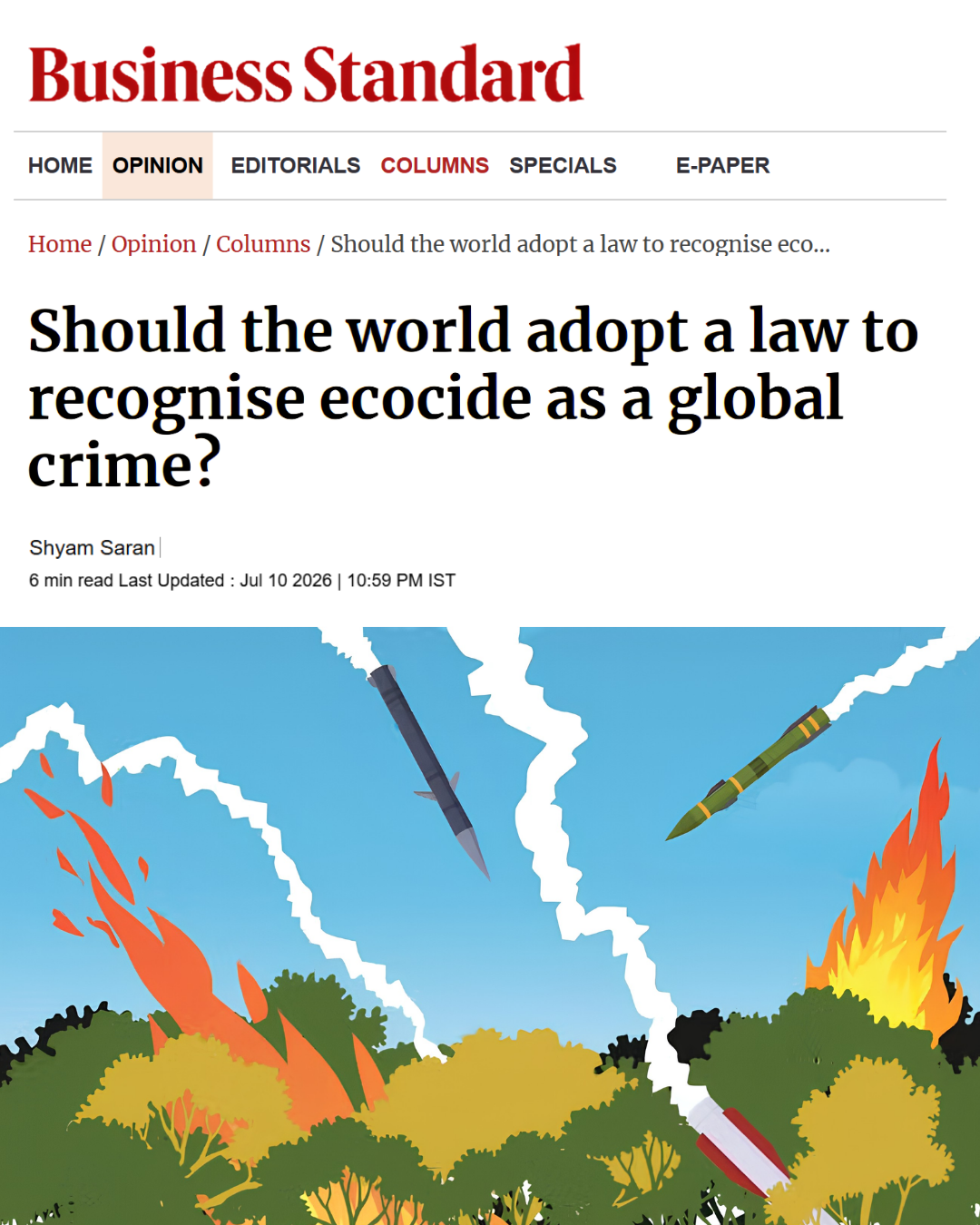
Should the world adopt a law to recognise ecocide as a global crime?
Former Indian Foreign Secretary, Shyam Saran, makes the case for recognising ecocide as a global crime. Acknowledging that ecocide can occur in both peacetime and wartime, Saran focuses on the major environmental impacts that have become a regular feature of modern warfare.
Shyam Saran for Business Standard (India), 10/07/26

The participatory path towards a Model Law on Ecocide
Rodrigo Lledó explains why the Model Law on Ecocide for Latin America is a crucial tool for legal cooperation, developed collaboratively through a public consultation open to citizens of Latin America, scientists, environmental campaigners, academics and, above all, local communities and Indigenous Peoples.
Rodrigo Lledó for Econews, 06/07/26
How the EU’s New Ecocide Law Binds National Courts
Paul Pogba covers the EU's revised Environmental Crime Directive, which requires all 27 states to introduce offences lawmakers have described as “comparable to ecocide”.
Paul Pogba for The European Post, 06/07/26

Human rights expert Philippe Sands wins German Peace Prize
Prof. Philippe Sands KC has won the Peace Prize of the German Book Trade, recognised in part for his advocacy for ecocide law. Sands co-chaired the 2021 Independent Expert Panel that formulated the legal definition of ecocide now used in proposals worldwide, including the 2024 push to amend the Rome Statute.
Elizabeth Grenier for DW, 25/06/26
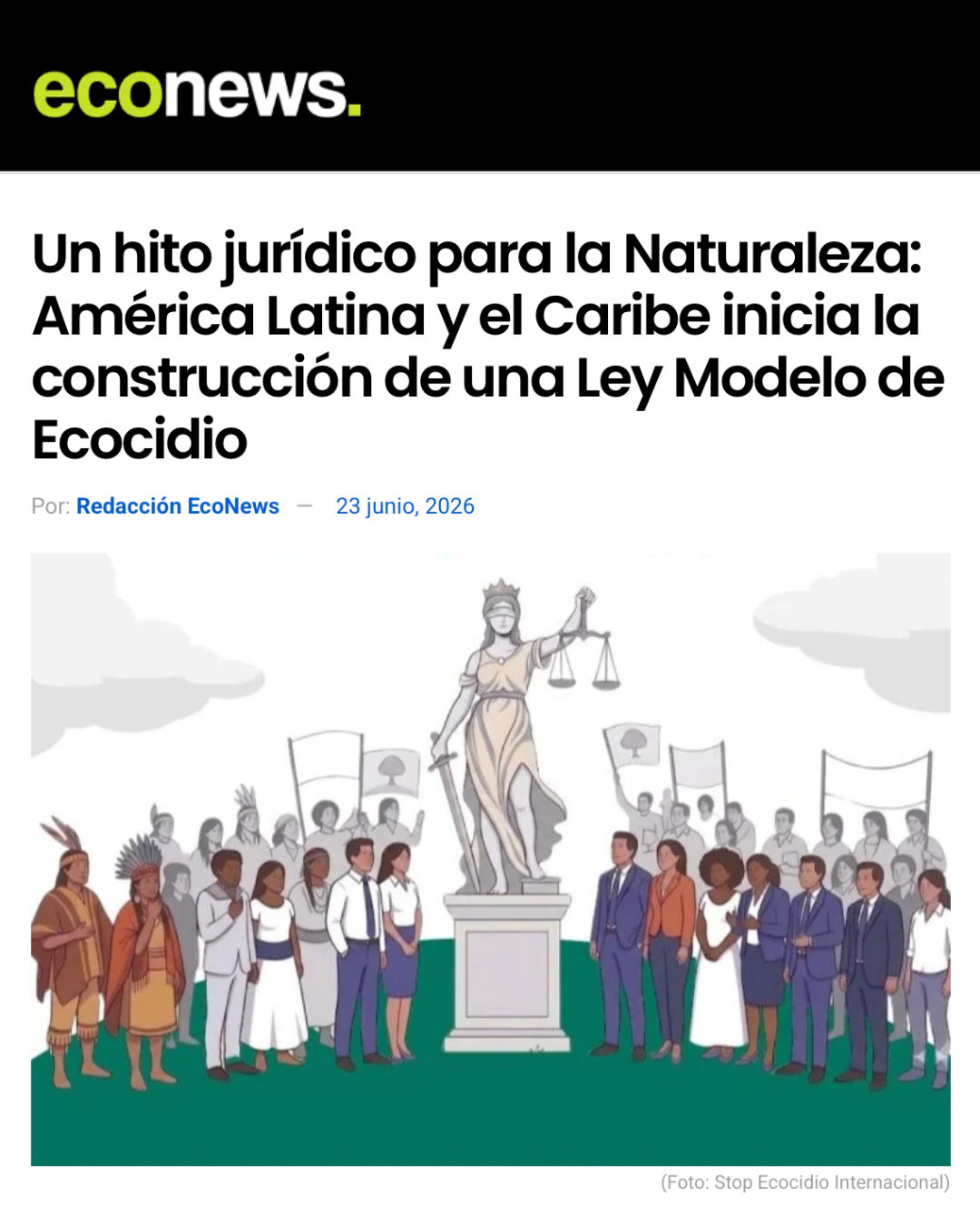
A legal milestone for nature: Latin America and the Caribbean begin drafting a Model Law on Ecocide
Latin America and the Caribbean are embarking on the drafting of a Model Law on Ecocide designed specifically for Latin American legal systems.
A participatory process in three phases: a regional public consultation open to all citizens; online technical roundtables by country with legal experts and environmental specialists; and an in-person conference of experts at the Universidad Iberoamericana in Mexico City, between 29 September and 1 October 2026, where the final text will be drafted.
Econews Editorial team for Econews, 23/06/26
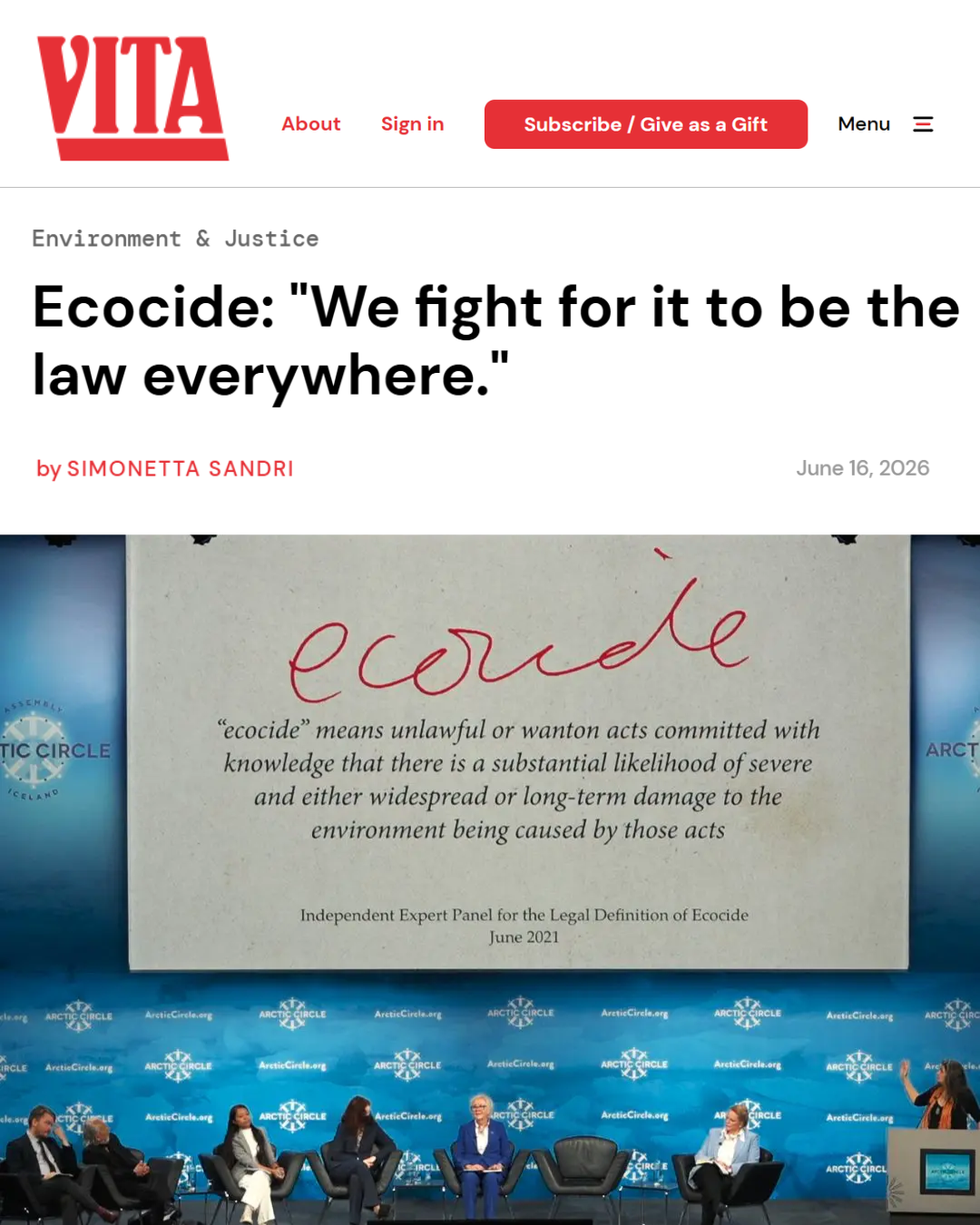
Ecocide, “we fight for it to be law everywhere.”
Dani Spizzichino, founder of Stop Ecocide Italy, argues that mass destruction of nature shouldn't be treated as an additional cost of business but as a crime, pointing to growing momentum behind ecocide law.
Simonetta Sandri for Vita.IT (Italy), 16/06/26

A journal of a journey through Latin America’s open wounds: ecocide, environmental defenders, the energy transition and environmental litigation
Rodrigo Lledó looks back on his tour of Latin America and the Caribbean, which took him to the fourth Conference of the Parties to the Escazú Agreement (COP4), the First Conference on the Transition Beyond Fossil Fuels in Santa Marta (Colombia) and the Fifth Meeting of the Alliance of Environmental Legal Clinics of Latin America and the Caribbean, where he presented, alongside Victor Rujano, coordinator of Stop Ecocide Int. for the Spanish-speaking world, the key ideas of the Model Law on Ecocide for Latin America and the Caribbean.
Rodrigo Lledó for Econews, 16/06/26
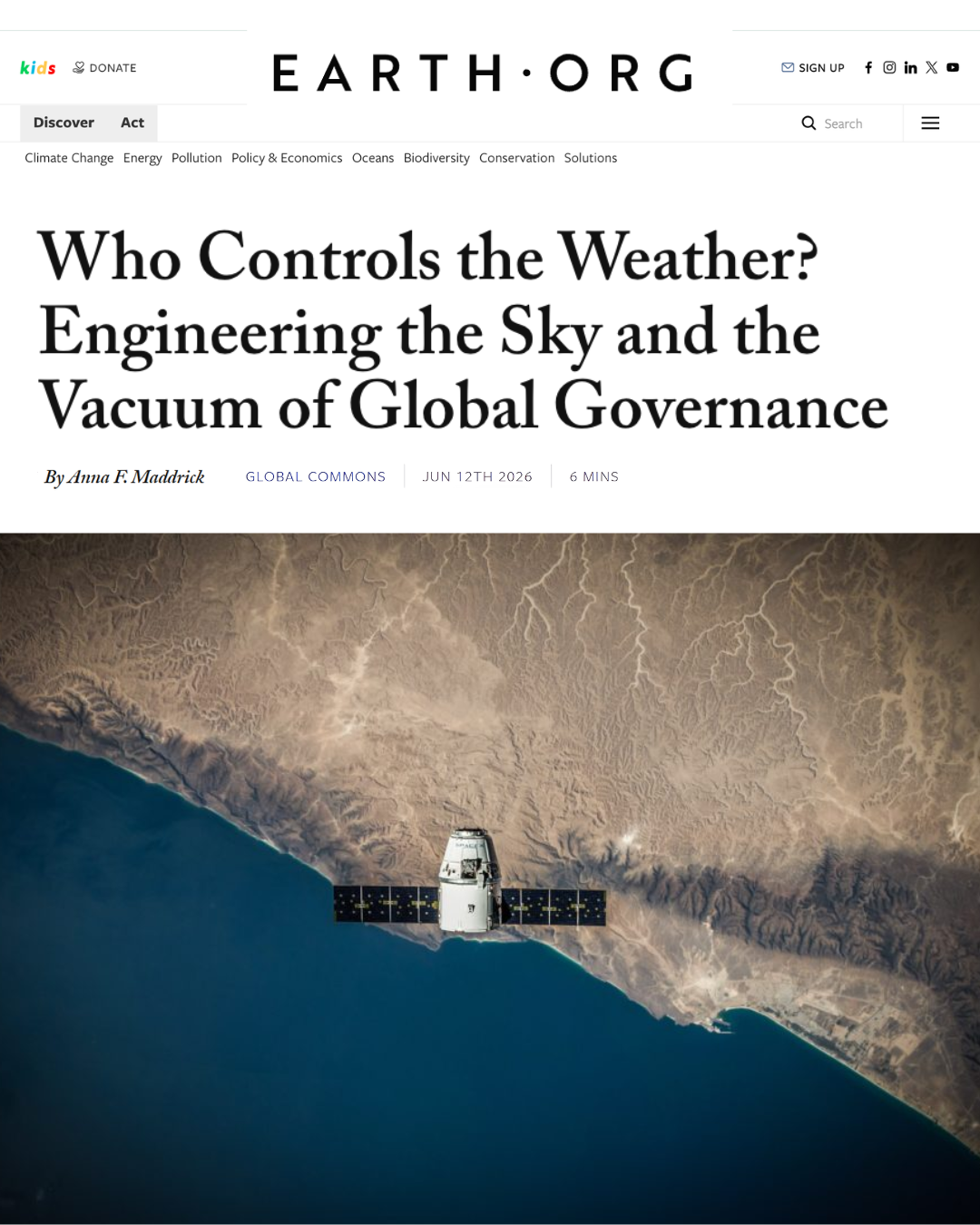
Who Controls the Weather? Engineering the Sky and the Vacuum of Global Governance
Anna Maddrick, Legal Adviser on Climate for the Permanent Mission of Vanuatu to the UN, writes that geoengineering technologies are advancing without an agreed upon accountability framework. She argues that ecocide law offers a credible way to govern their development.
Anna F. Maddrick for Earth.org, 12/06/26
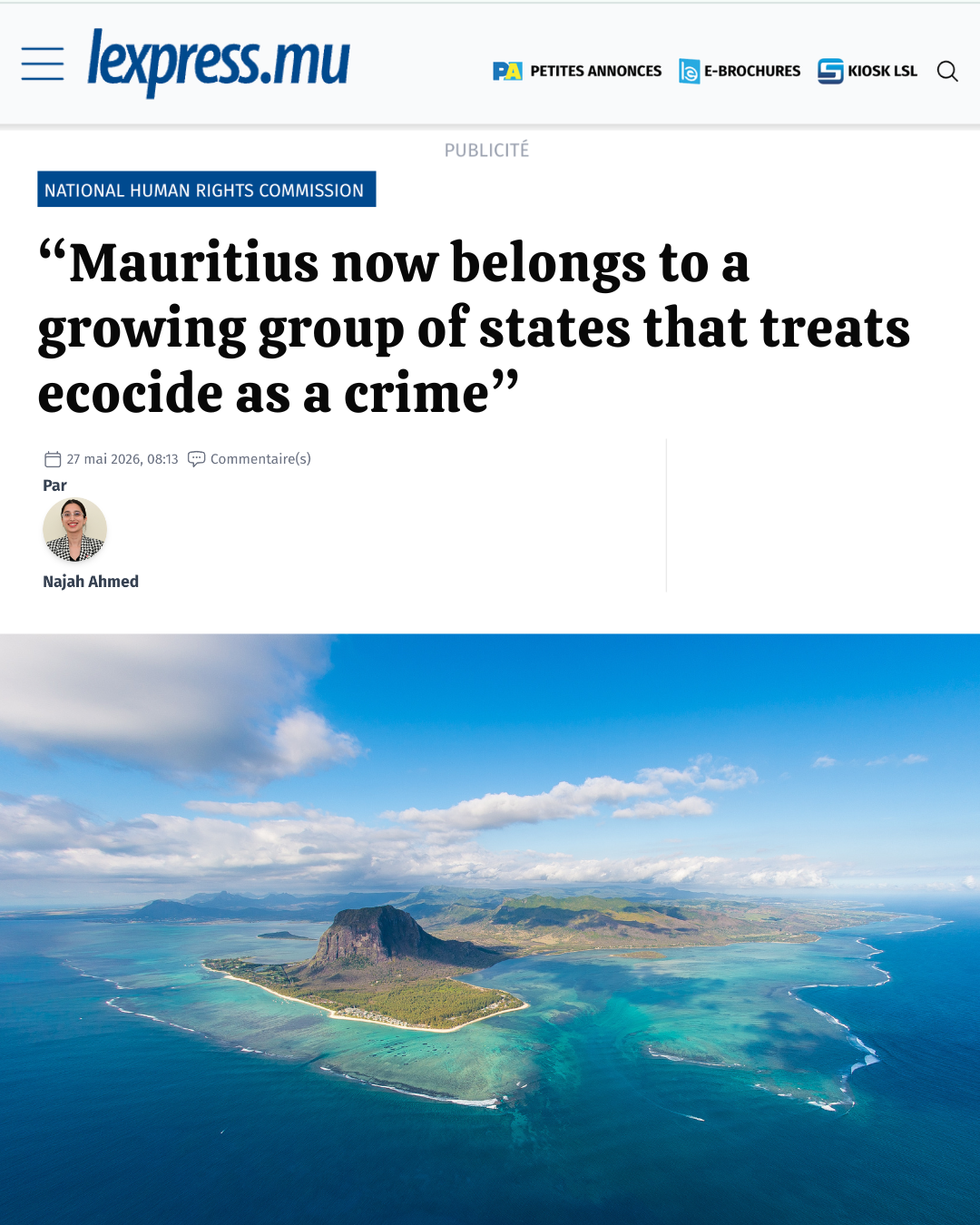
‘Ecocide’: when harm to nature becomes a crime
Najah Ahmed, Deputy Chairperson of the Mauritius National Human Rights Commission, writes that Mauritius joins a growing group of states in treating ecocide as a crime. She frames the new law as a human rights measure, arguing that a healthy environment is foundational to human wellbeing.
Najah Ahmed for L’express Mu (Mauritius), 27/05/26
![[Insight] Window on Europe: Belgium becomes first EU nation to legislate against ecocide](https://images.squarespace-cdn.com/content/v1/5ca2608ab914493c64ef1f6d/1781109928191-KXUSKXU1PZFYMJH3GIDF/IEEP+UK+Belgium+Article++May+2026.png)
[Insight] Window on Europe: Belgium becomes first EU nation to legislate against ecocide
Michael Nicholson writes that the new ecocide law in Belgium is a positive step forward for the country while also offering a model for other countries to introduce similar legislation.
Michael Nicholson for Institute for European Environmental Policy (UK), 21/05/2026
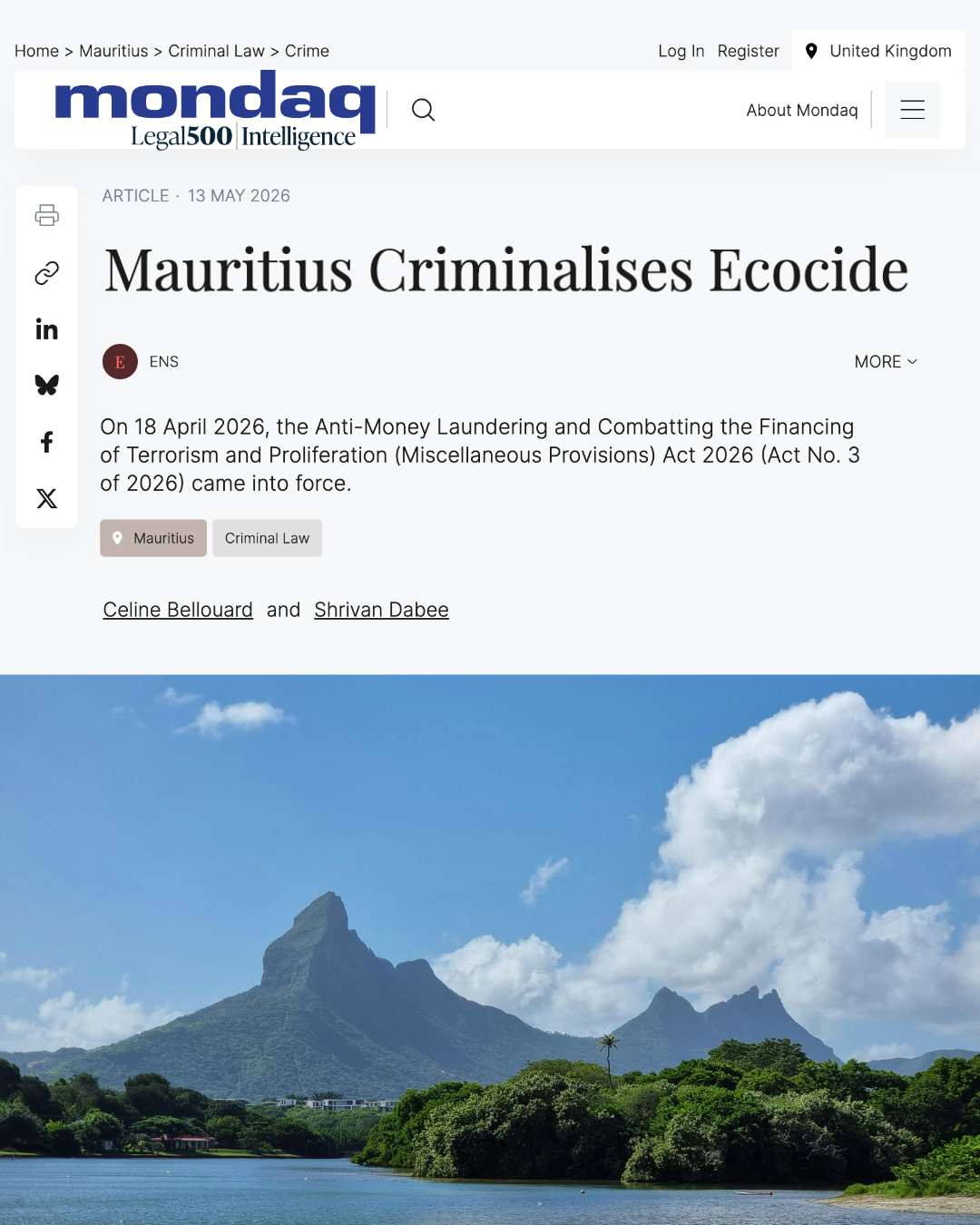
Mauritius Criminalises Ecocide
Mauritius introduces an amendment to its Environment Act 2024, making ecocide a criminal offence. As a Small Island Developing State, it is particularly vulnerable to environmental threats, which highlights the law’s significance for the country’s environmental protection efforts.
Celine Bellouard & Shrivan Dabee for Mondaq, 13/05/2026
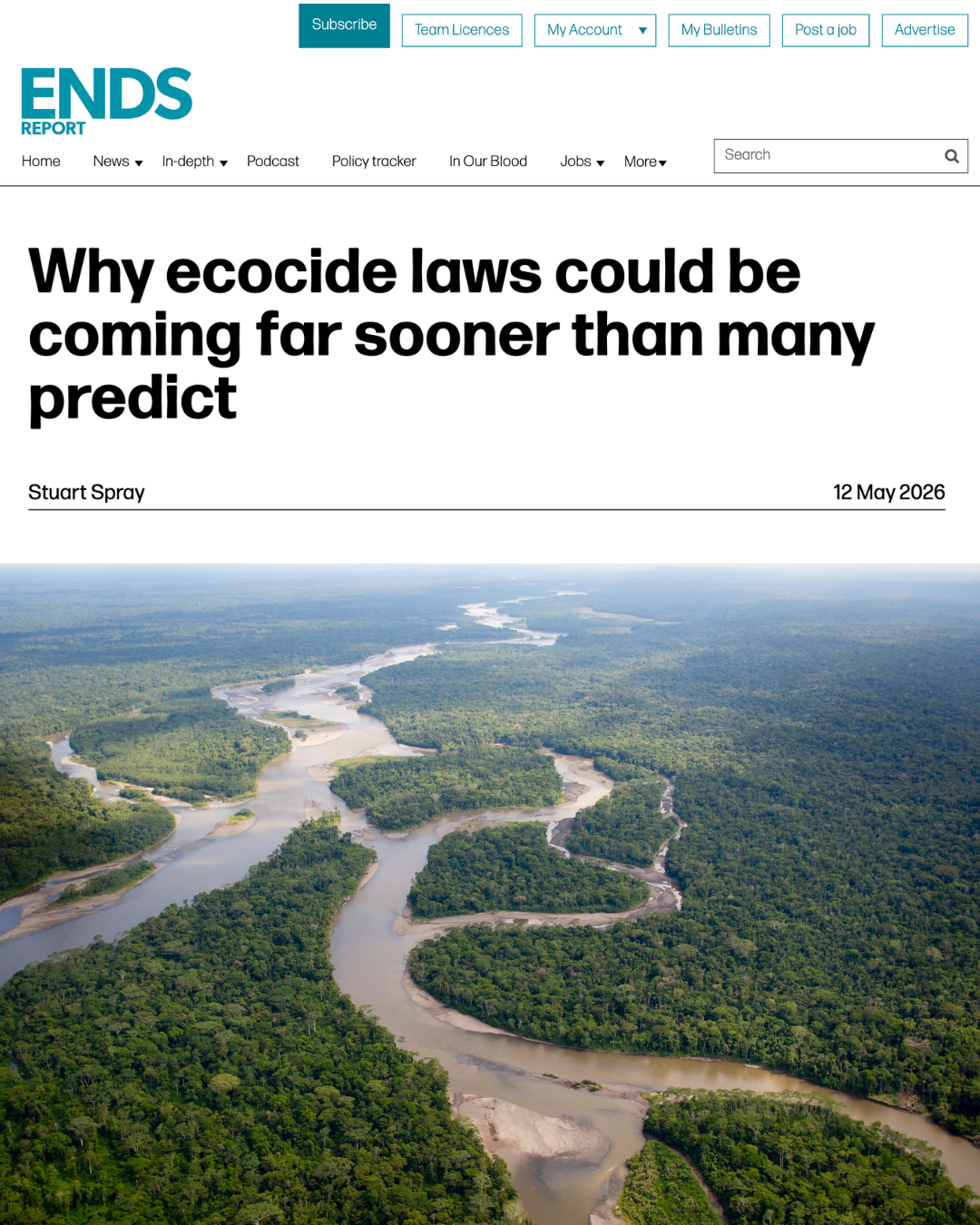
Why ecocide laws could be coming far sooner than many predict
Stuart Spray discusses the latest developments in the movement to make mass environmental destruction, ecocide, a crime. Speaking to SEI’s Jojo Mehta, and drawing on other legal experts such as Gerard Forlin KC, Paulo Busse and Alexa Culver, he traces the momentum and potential of ecocide law.
Stuart Spray for ENDS Report, 12/05/2026
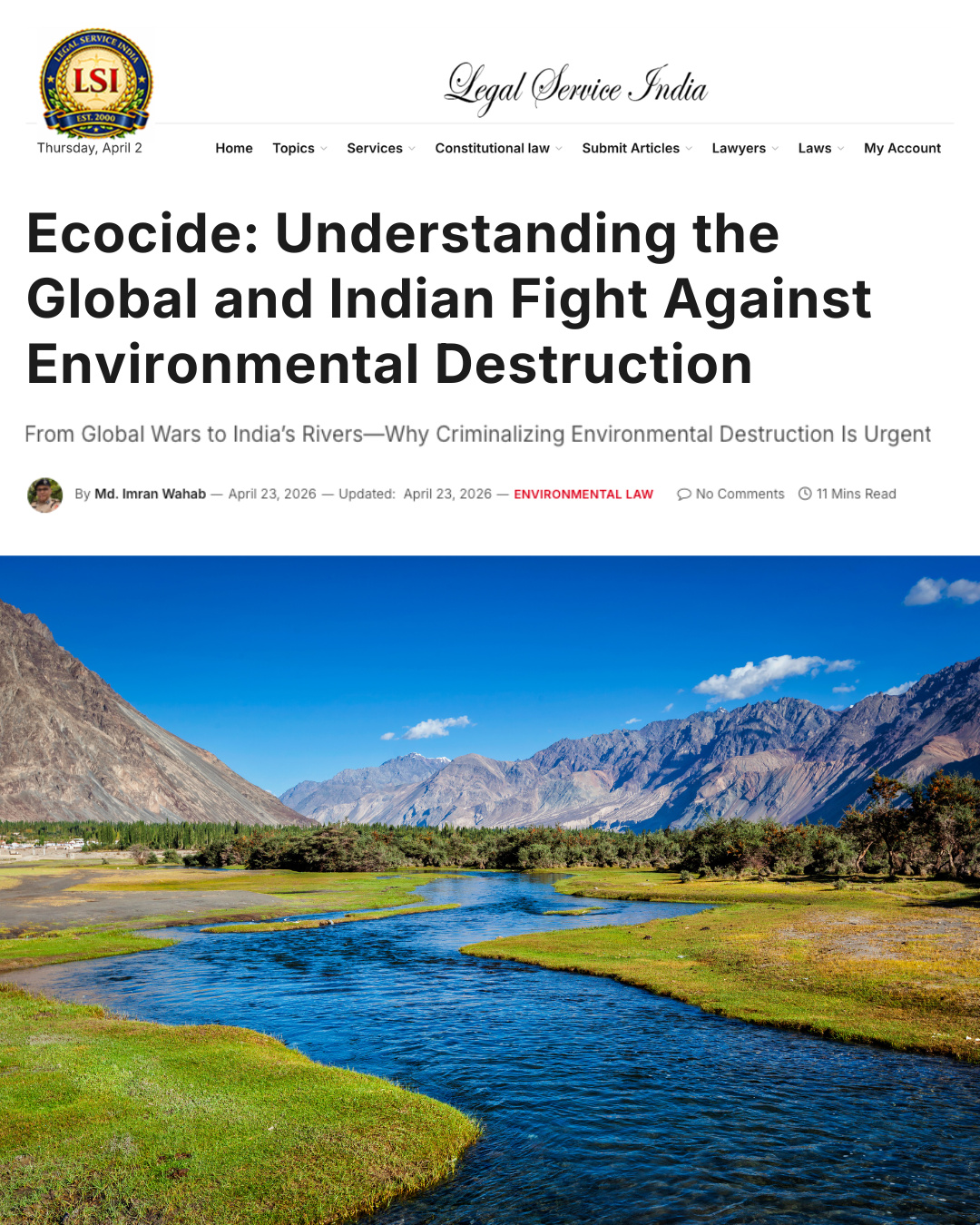
Ecocide: Understanding the Global and Indian Fight Against Environmental Destruction
Legal scholar Imran Wahab writes that making mass harm to nature a serious crime would inspire a shift in environmental accountability, ensuring that clear red lines prevent the most serious ecological harms before they occur. Not only would it protect vital ecosystems, it would also promote climate resilience, safeguard livelihoods, and ensure that development can occur within healthy limits.
Md. Imran Wahab for Legal Service India, 23/04/2026