Ecocide Law in the media
Michael Nicholson writes that the new ecocide law in Belgium is a positive step forward for the country while also offering a model for other countries to introduce similar legislation.
Michael Nicholson for Institute for European Environmental Policy (UK), 21/05/2026
Mauritius introduces an amendment to its Environment Act 2024, making ecocide a criminal offence. As a Small Island Developing State, it is particularly vulnerable to environmental threats, which highlights the law’s significance for the country’s environmental protection efforts.
Celine Bellouard & Shrivan Dabee for Mondaq, 13/05/2026
Stuart Spray discusses the latest developments in the movement to make mass environmental destruction, ecocide, a crime. Speaking to SEI’s Jojo Mehta, and drawing on other legal experts such as Gerard Forlin KC, Paulo Busse and Alexa Culver, he traces the momentum and potential of ecocide law.
Stuart Spray for ENDS Report, 12/05/2026
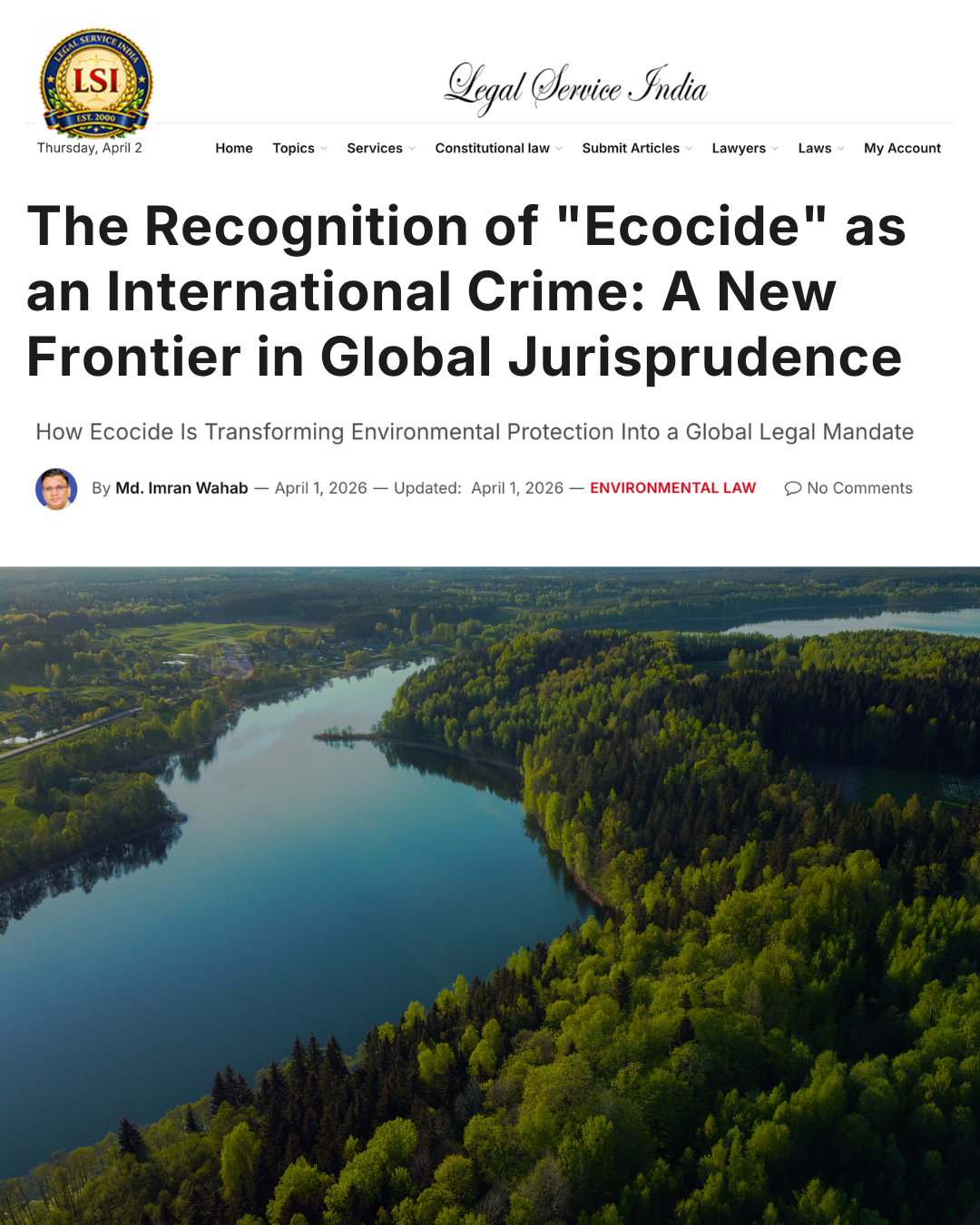
Legal scholar Imran Wahab writes that making mass harm to nature a serious crime would inspire a shift in environmental accountability, ensuring that clear red lines prevent the most serious ecological harms before they occur. Not only would it protect vital ecosystems, it would also promote climate resilience, safeguard livelihoods, and ensure that development can occur within healthy limits.
Md. Imran Wahab for Legal Service India, 23/04/2026
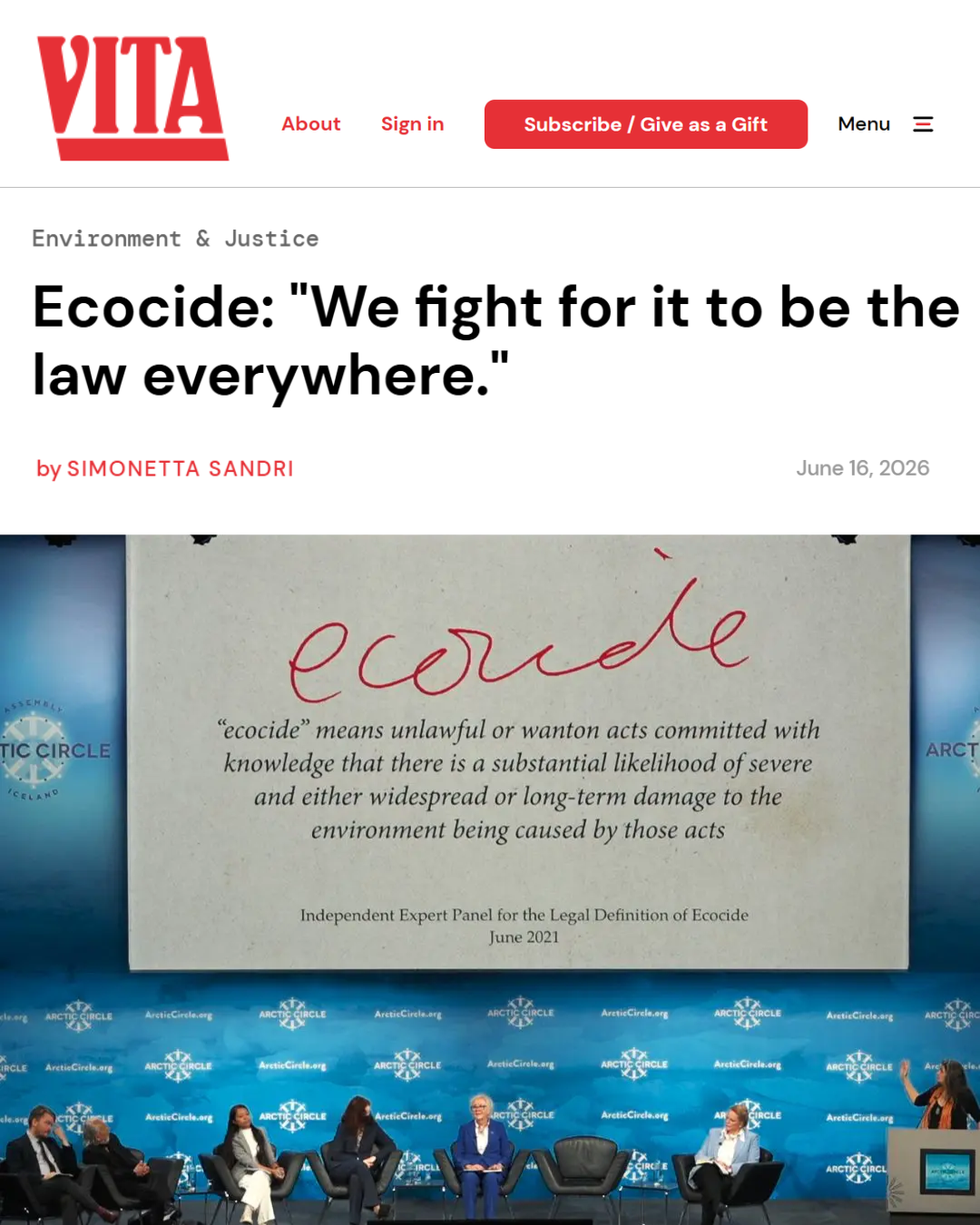
María Elorza Saralegui speaks to legal experts, including Kate Mackintosh, about the powerful definition of ecocide established by the Independent Expert Panel in 2021 which is forming the basis of ecocide law proposals worldwide.
María Elorza Saralegui for WOXX (Luxemburg), 23/04/2026
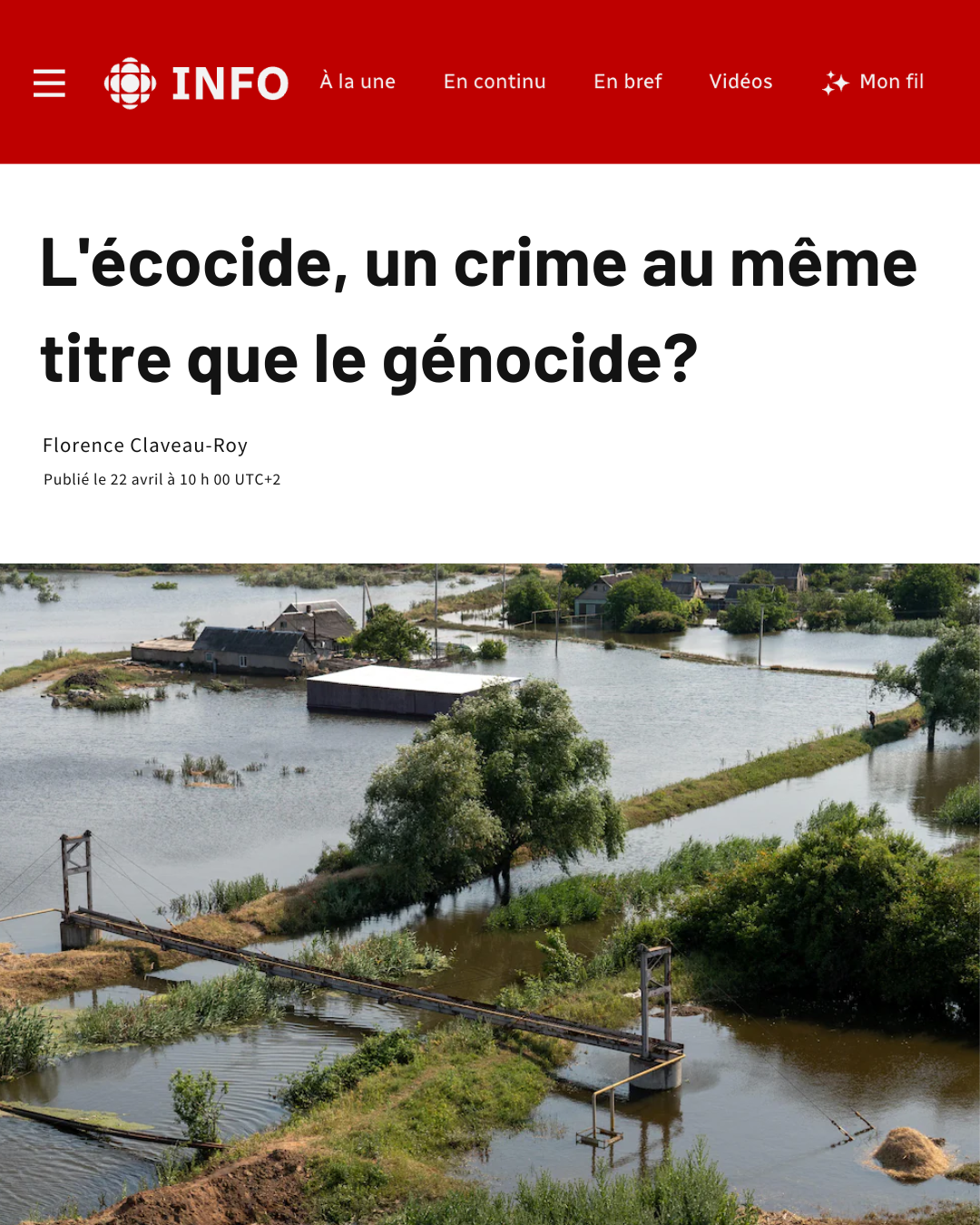
Florence Cleaveau-Roy explores why legal experts believe that there is so much untapped potential to leverage criminal law for environmental protection.
Florence Claveau-Roy for CBC (Canada), 22/04/2026
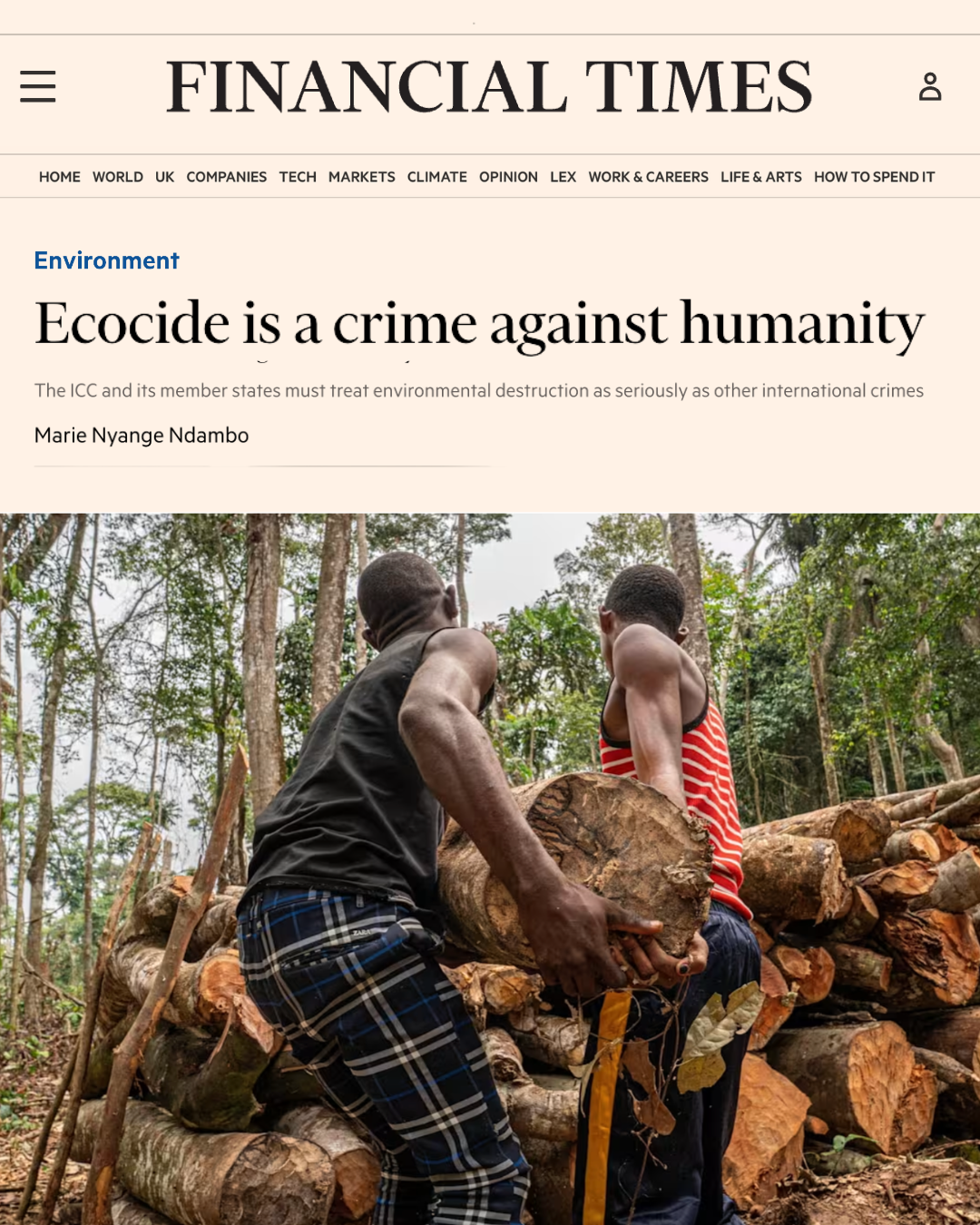
The DRC’s Environment Minister Marie Nyange Ndambo writes that ecocide law would shift incentives away from short-term exploitation and toward sustainable, accountable development.
Marie Nyange Ndambo for Financial Times, 22/04/2026
Analyses the significance of Mauritius establishing ecocide as a domestic crime. Namely, its potential as a deterrent, shifting decision-making towards sustainable practices. She also notes that its introduction signals a shift toward an eco-centric legal framework where all of nature is considered to be inherently valuable and deserving of legal standing.
Valentine Mayer for L’express Maurice, 19/04/2026
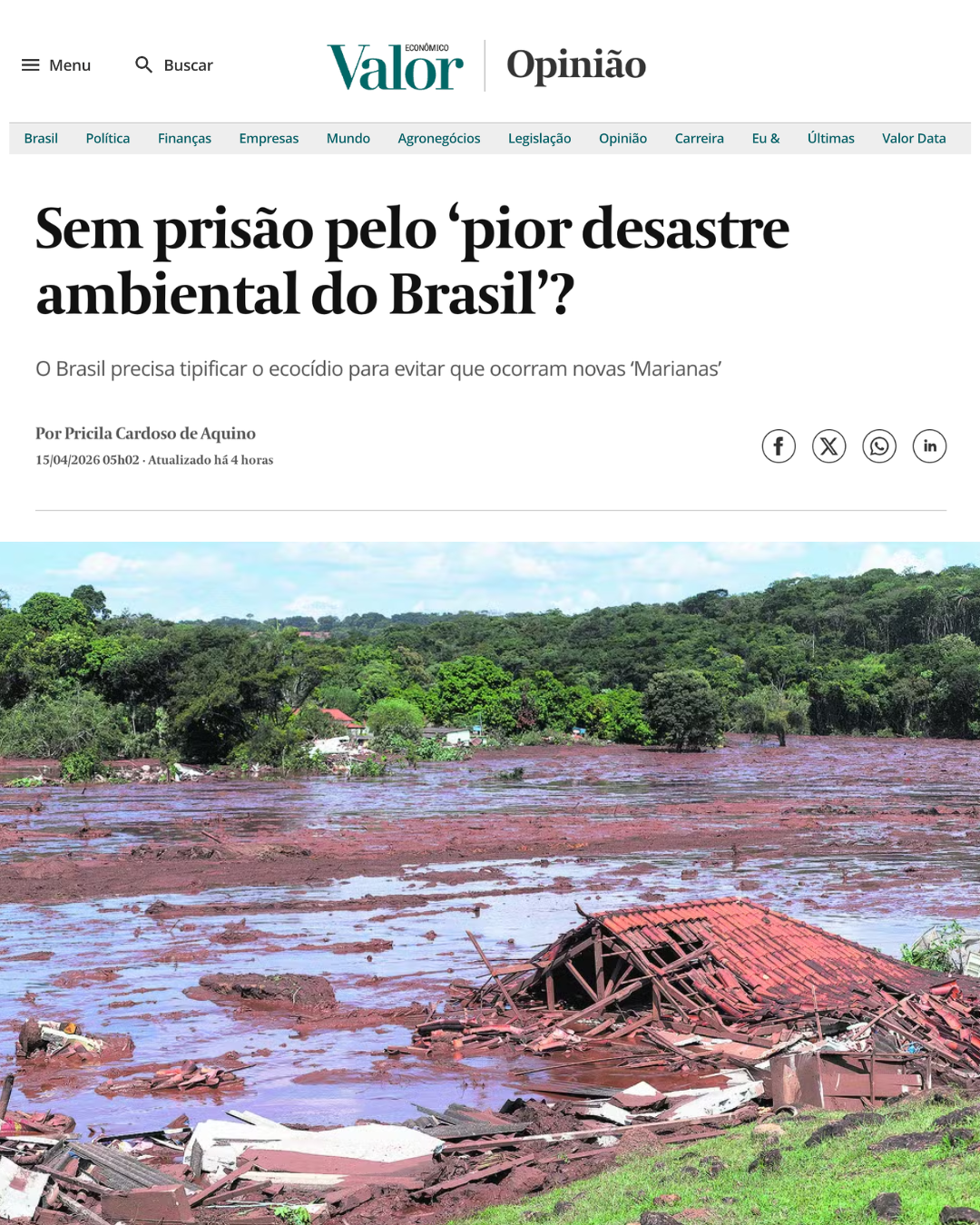
Argues that the Mariana dam collapse highlights the need for ecocide law. British courts found BHP liable for the collapse of the Fundão dam in Mariana, yet the ruling led to no individual legal consequences for the most senior decision makers involved in causing the catastrophe.
Pricila Cardoso de Aquino for Valor Economico, 15/04/2026
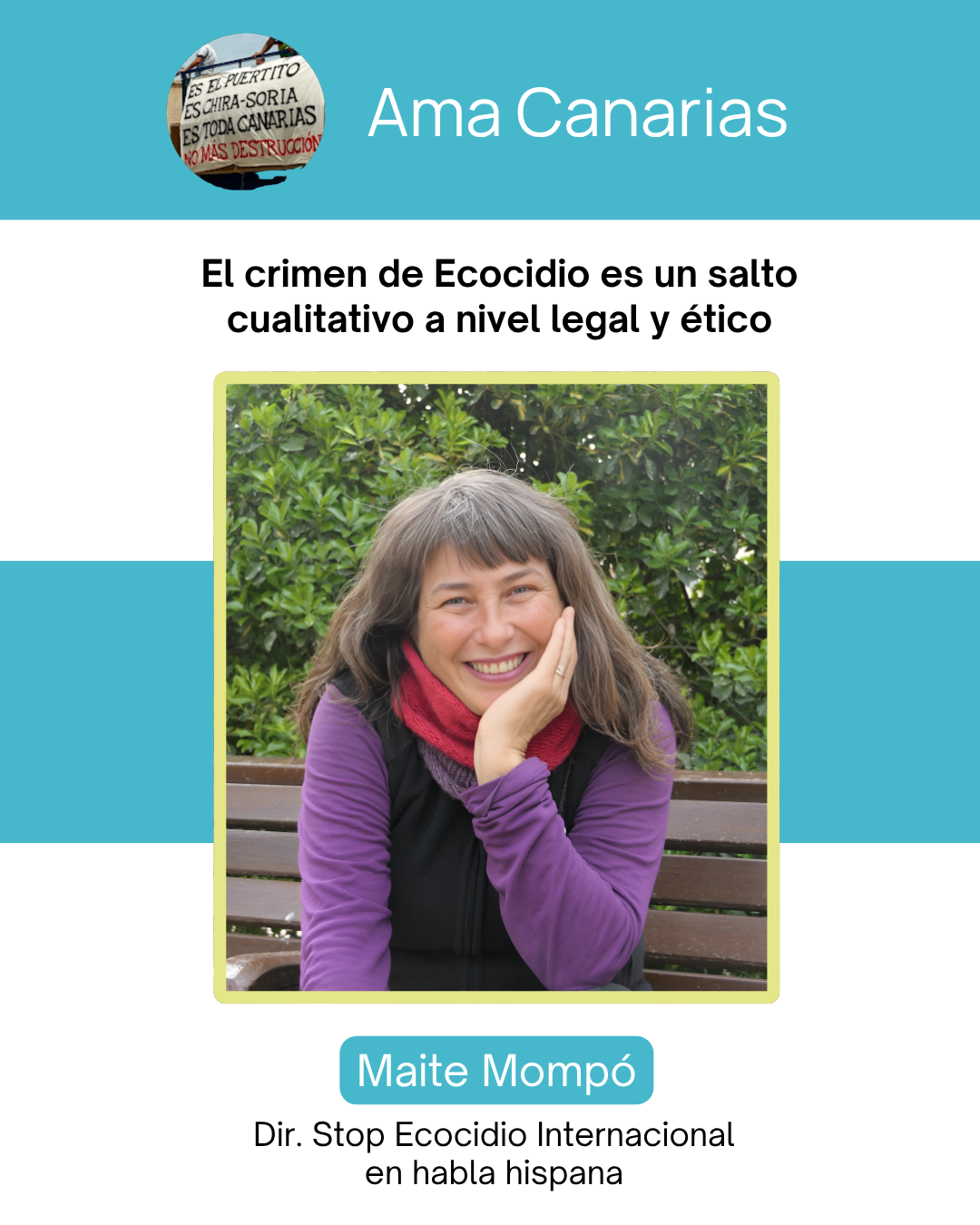
Maite Mompó speaks about the progress towards classifying ecocide as a crime at both international and national levels, and Spain’s current favourable position in relation to taking the lead on global recognition of ecocide as a crime.
Noticias positivas, 15/04/2026
Traces how the 2021 ecocide definition developed by the Independent Expert Panel (convened by the Stop Ecocide Foundation) has become the basis for legislative efforts worldwide.
Imran Wahab for Legal Service India, 01/04/2026
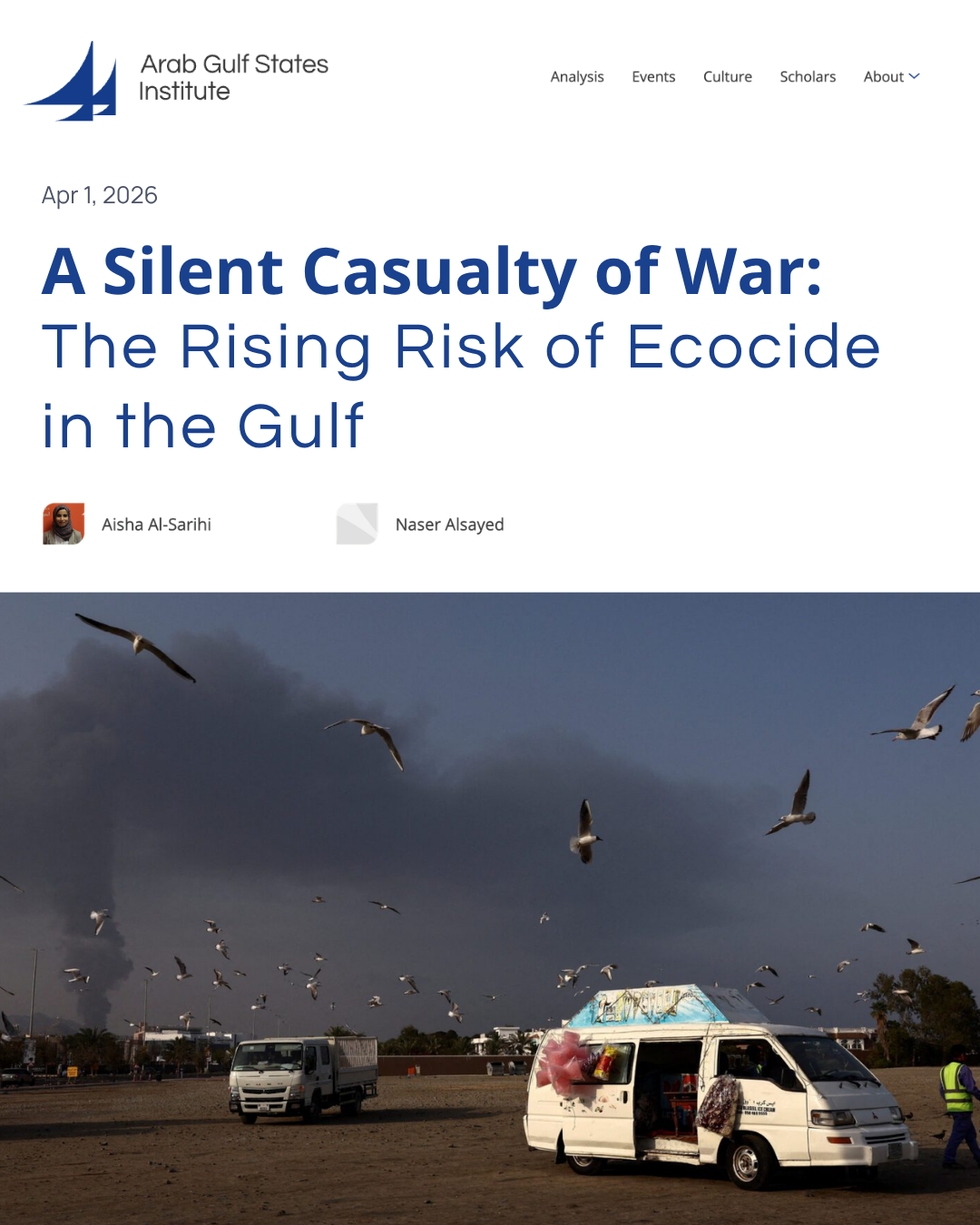
Examines how the ongoing conflict in the Gulf is causing environmental harm, from toxic "black acidic rain" following refinery strikes, to oil spill risks in the Persian Gulf, and attacks on desalination plants that supply drinking water to over 100 million people.
Aisha Al-Sarihi and Naser Alsayed for Arab Gulf Institute, 01/04/2026
Connection live from Costa Adeje with the director of Stop Ecocide International Spanish-speaking division, Maite Mompó, to discuss the link between ecocide and corruption, and how wars impact the environment. She also shares her thoughts on Cuna del Alma, and the progress being made.
“La Llamada del Corruptómetro”, 28/03/2026
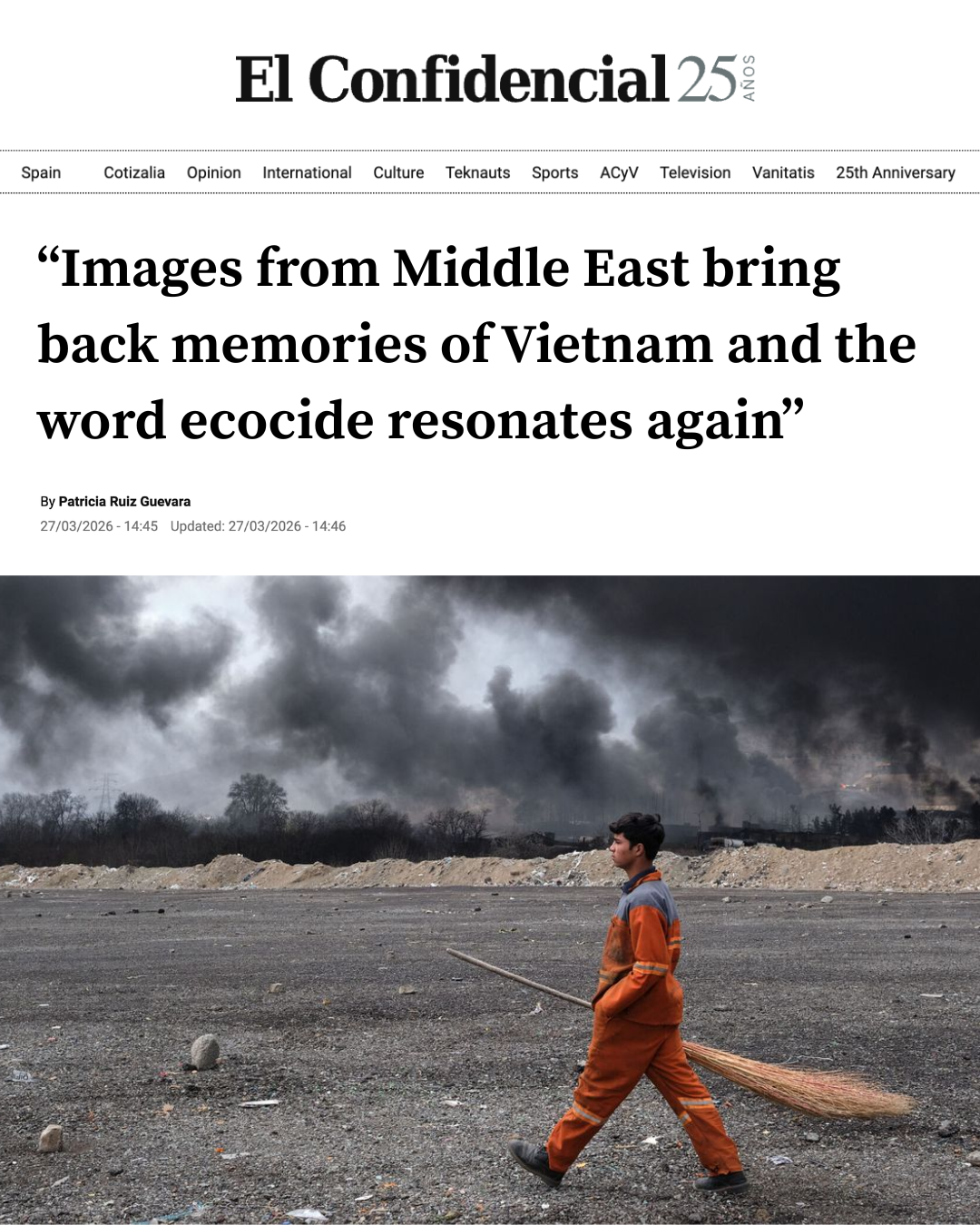
Journalist Patricia Ruiz Guevara reflects on the history and motivations behind the movement to criminalise ecocide: “Ecocide is not an internationally recognised crime, but the geopolitical context seems to be crying out for it.” The article also includes comments made by Maite Mompó in an interview with the publication.
Patricia Ruiz Guevara for El Confidencial, 27/03/26
Iran’s Foreign Minister, Abbas Araqchi, has stated that the attack launched by Israel during the war against fuel depots in Tehran constitutes ‘ecocide’ or environmental destruction, after the Iranian capital was engulfed in a toxic cloud.
EFE, 16/03/26
Interview with Maite Mompó on the programme El Bosque Habitado (Radio 3), in which she spoke, among other topics, about the great opportunity Spain has to include ecocide in its Criminal Code as an autonomous international crime.
Maite Mompó for Bosque habitado (Radio3), 08/02/26
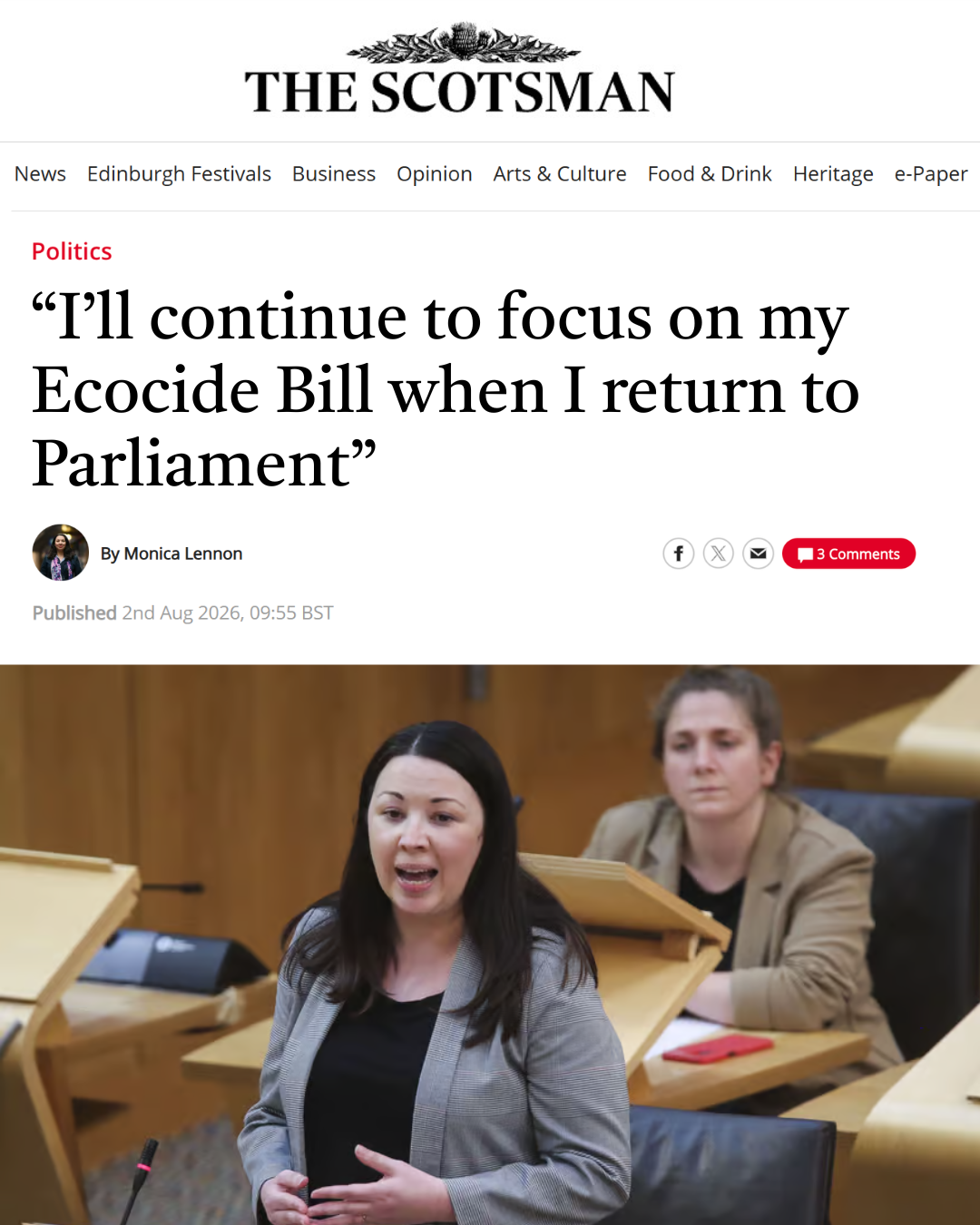
Reports on the Scottish parliament’s vote to advance Monica Lennon’s ecocide bill.
Tess Colley for Ends Report, 06/02/26
Stop Ecocide International's Americas Director, Rodrigo Lledó, discusses the stark warning from UK intelligence services: the destruction of nature now poses an urgent national security threat.
Rodrigo Lledó for EcoNews, 05/02/26
In the first stage of voting on the Ecocide (Scotland) Bill, parliamentarians overwhelmingly voted to back the general principles of the legislation, BBC News reports.In the first stage of voting on the Ecocide (Scotland) Bill, parliamentarians overwhelmingly voted to back the general principles of the legislation, BBC News reports.
BBC News, 05/02/26
David Attenborough’s cameraman, Doug Allan, calls on parliamentarians to back Scotland’s Ecocide Bill ahead of a crucial vote.
Dan Vevers for Scottish Daily Record, 01/02/26
Argues that civil and administrative penalties are inadequate to prevent the worst environmental harms globally.
Kariuki Muigua & Company for The Lawyer Africa, 31/01/26
Stop Ecocide International’s CEO and co-founder, Jojo Mehta, discusses the new national security assessment produced by the UK's intelligence community, which identifies ecosystem collapse as a direct threat to security and prosperity.
Jojo Mehta for Earth.org, 29/01/26
An interview with Stop Ecocide International’s Jojo Mehta about the publication of the UK’s national security assessment, identifying ecosystem destruction as a major security threat.
Stefanie Schüler for Radio France Internationale, 26/01/26
El Tiempo Argentina investigates the rapidly growing movement to criminalise ecocide in Argentina, where numerous lawmakers are now endorsing the idea.
Verónica Benaim for El Tiempo Argentino, 17/01/26
Anesha George explores the global push for ecocide law, including at the International Criminal Court.
Anesha George for Hindustan Times, 16/01/26
Economist Rafael Kemelmajer argues that when ecosystems are destroyed, they become fiscal liabilities and supply shocks.
Rafael Kemelmajer for EcoNews, 09/01/26
The OBA explores how criminalising ecocide can deter harm where regulations too often fail.
Maryama Farah for Ontario Bar Association, 09/01/26
Dame Eleanor Sharpston (former Advocate General, European Court of Justice) & Monica Schüldt (co-founder, Ecocide Law Alliance) argue that the criminalisation of ecocide, would change corporate decisionmaking at the highest level, deterring the worst harms to the Earth before they occur.
Dame Eleanor Sharpston and Monica Schüldt for Law.com, 05/01/26
The Wave reports on the publication of the International Criminal Court’s new policy paper on addressing environmental harm.
Isabella Kaminski and Molly Quell for The Wave, 18/12/25
The Brussels Times discusses the significance of the International Criminal Court Office of the Prosecutor’s new policy on addressing environmental damage through the Rome Statute.
Mose Apelblat for The Brussels Times, 15/12/25