
Mexico: Ecocide Bill introduced in Congress
Summary
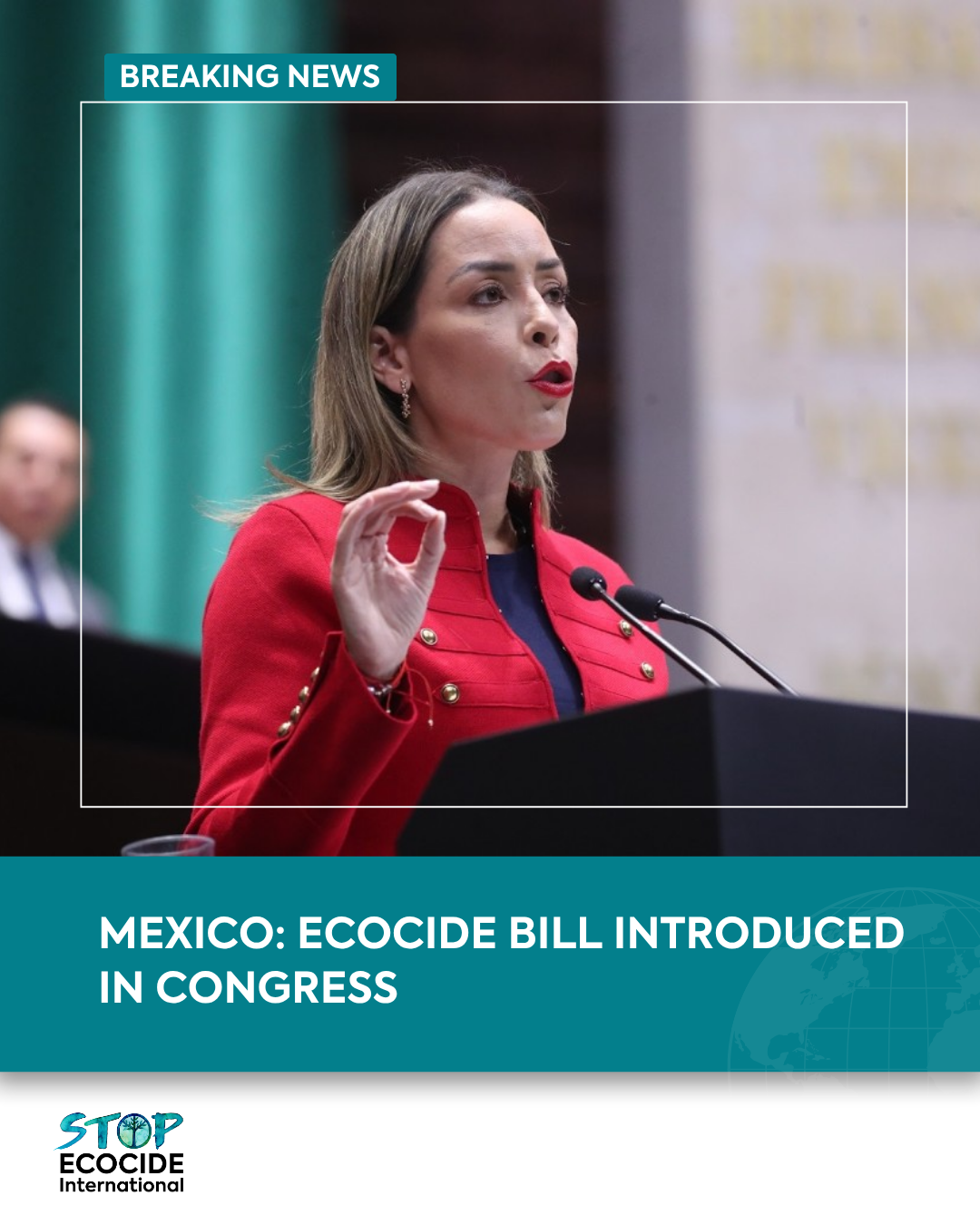
A bill to criminalise severe environmental destruction (ecocide) has been submitted to Mexico’s Chamber of Deputies – the lower house of the country’s parliament.
The proposed legislation, put forward by Deputy Verónica Martínez García of the Institutional Revolutionary Party (PRI) on 9 September, would amend Mexico’s Federal Criminal Code to add a new crime of ecocide.
The amendment defines ecocide as ”serious, extensive or irreversible damage to one or more ecosystems, to biodiversity, to natural resources, to environmental services or to ecological balance, compromising the human right to a healthy environment”.
This wording echoes the thresholds of ecocide contained in the definition formulated by the Independent Expert Panel convened by the Stop Ecocide Foundation in 2021.
Convictions would carry penalties of 15 to 30 years imprisonment under the proposed amendment, with fines of up to 50,000 days of wages and duties for the reparation of environmental damage. Penalties would increase by up to 50% in aggravating circumstances. For example, in cases where offences take place in protected areas or impact endangered species.
Martínez García’s bill notes that this proposal sits within a wider global shift towards accountability for ecocide law, with a number of countries developing national ecocide legislation and a global movement driving recognition of ecocide as an international crime.
Mexico has seen several previous attempts to criminalise ecocide at the federal level. Legislative proposals were introduced by María Victoria Mercado Sánchez in 2018, Samuel García Sepúlveda in 2020, Raúl Paz Alonzo in 2021 and Karina Barrón Perales in 2023. Three further proposals followed in 2025, from Ana Isabel González González, Luis Agustín Rodríguez Torres and Eduardo Gaona Domínguez. While differing in their definitions and proposed penalties, all sought to establish criminal liability for serious environmental destruction.
Martínez García’s bill is the latest in this series of legislative initiatives. It will now be referred to the Justice Committee, which must approve it before it can proceed to the Chamber of Deputies for a full vote.
You can find the full text of Martínez García’s bill here. A detailed overview of earlier legislative proposals is available in the Mexican legal publication Umbrales (p. 51), here.