
Mauritius criminalises ecocide
Summary
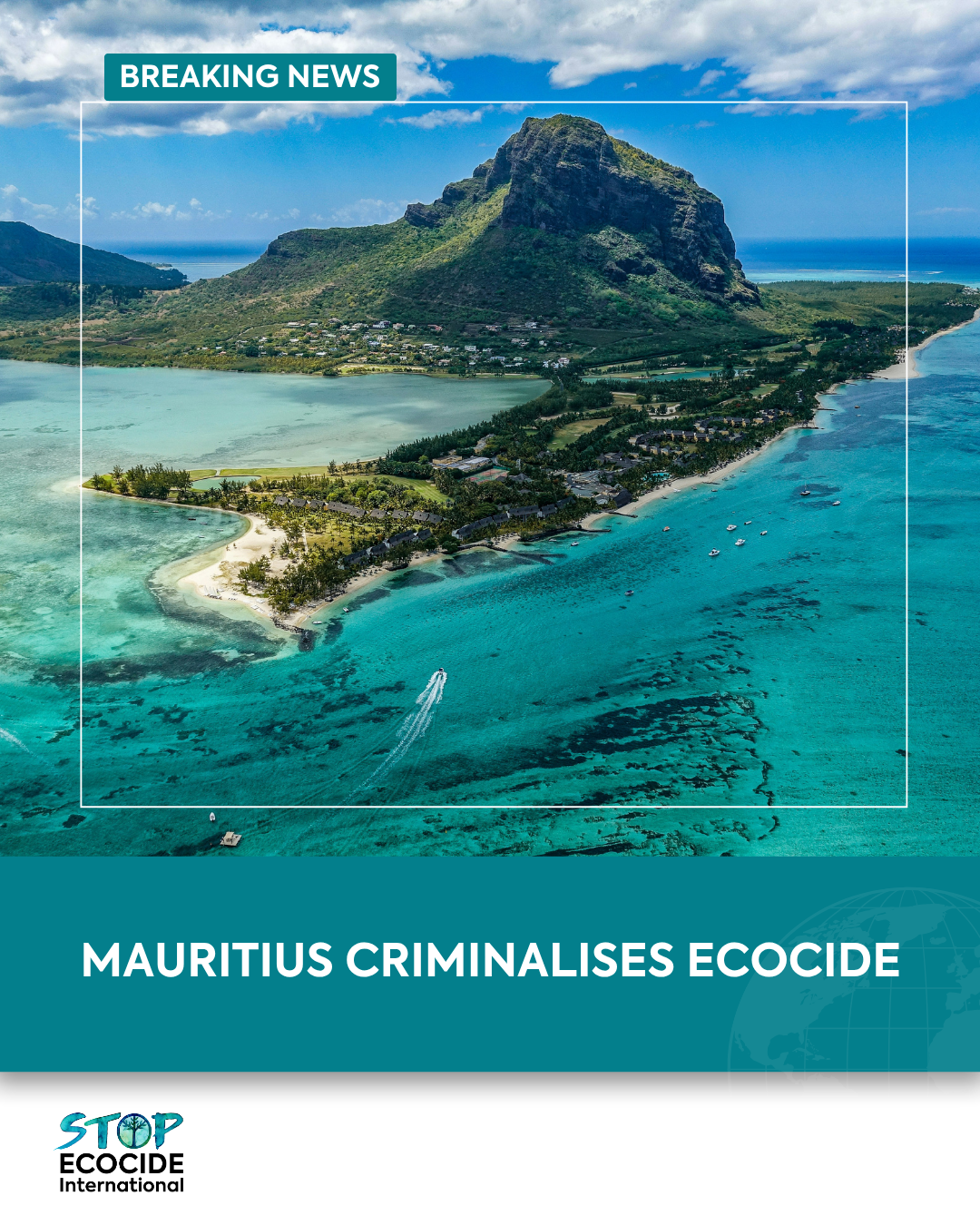
Mauritius has become the latest country to introduce a domestic crime of ecocide.
Classified by the United Nations as a Small Island Developing State, it faces significant environmental risks, including sea level rise and pressure on marine ecosystems that underpin key sectors of its economy such as tourism and fisheries.
The provision, set out in an anti-money laundering and financial crimes law, defines ecocide as “an unlawful or wanton act committed with knowledge that there is a substantial likelihood of severe and either widespread or long-term environmental damage” – language that closely reflects the definition proposed by the Independent Expert Panel convened by the Stop Ecocide Foundation in 2021.
Within the Act, which also addresses countering the financing of terrorism and related financial crimes, the offence of ecocide carries penalties including fines, up to 10 years' imprisonment, compensation and potential exclusion from public funding or permits, as well as environmental remediation measures.
Patricia Willocq, Diplomatic Director for Africa and Francophone Countries at Stop Ecocide International, said:
“This is incredibly encouraging news from Mauritius and a strong signal of growing global momentum towards legal accountability for severe environmental harm.
Across Africa, countries such as the Democratic Republic of the Congo, the Republic of the Congo, Burundi, Zimbabwe, Ghana and Zambia are advancing ecocide law in different but complementary ways: some are supporting the initiative led by Vanuatu, Fiji and Samoa at the International Criminal Court; others are pursuing domestic legal pathways; while regional engagement is also taking shape through mechanisms within the African Union.
This diversity reflects a continent increasingly taking the lead on the recognition of ecocide as a crime. African island states, such as Mauritius, like their Pacific counterparts, are helping to drive this progress from the frontlines of environmental harm. These dynamics were reflected last month during the SIDS Forum programme at the 11th Summit of the Organisation of African, Caribbean and Pacific States, where ecocide is gaining recognition as a shared priority."
The full Anti-Money Laundering, Combatting the Financing of Terrorism and Countering Proliferation Financing (Miscellaneous Provisions) Act 2026 can be found here.